
The Harbour Baths are easy to overlook if you picture Ephesus only as a procession from the Library of Celsus to the Great Theatre. The city also had a broad district near its former harbour where bathing, exercise and public movement met. North of the Arcadian Street, the surviving bath and gymnasium remains offer a different way to read the lower city: through its everyday infrastructure and its changing waterfront.
Place the baths in the harbour quarter
UNESCO describes Ephesus as an outstanding Roman port city, with a sea channel and harbour basin. The sea is no longer beside the ruins, so the modern landscape can make the old relationship difficult to imagine. Begin by locating the Great Theatre, Arcadian Street and the former harbour area on an official site map. The street led toward the port; the Harbour Baths and their athletic grounds lay to its north. This orientation is more useful than searching for an isolated building without its setting.
The Turkish Ministry of Culture and Tourism's Selçuk–Ephesus guide identifies a Harbour Gymnasium and Baths and describes two palaestrae, or athletic courts, associated with the complex. The Ephesus World Heritage nomination describes three linked parts: baths, gymnasium and athletic grounds. Together, those accounts make clear that this was a substantial public complex. A visitor looking only for rows of individual bathing rooms may miss the scale of the open spaces that belonged to it.
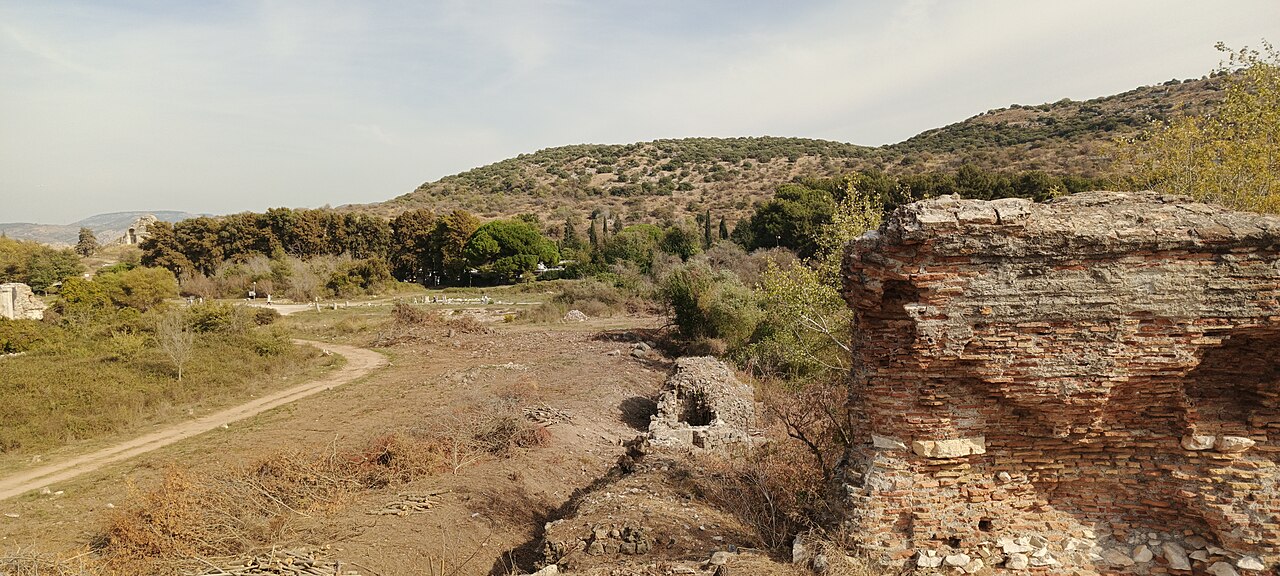
Stand back from the masonry where the visitor route permits and compare the surviving walls with the open ground around them. Try to imagine movement between covered rooms and outdoor exercise space, while remembering that many original surfaces and roofs have gone. The photograph below is a view of the Harbour Baths themselves; it does not show a reconstructed Roman interior or a functioning bath.
Understand why bath and gymnasium belong together
The word gymnasium may suggest a modern sports hall, but the Roman complex at Ephesus joined exercise areas to bathing facilities. The ministry guide calls its open courts palaestrae. The UNESCO nomination places athletic grounds alongside the bath and gymnasium, and notes the complex's broadly symmetrical plan. These descriptions help explain why the ruins occupy more ground than a single bathhouse would. They also caution against assigning a precise function to every fragment visible from today's path without an archaeological plan.
The complex was developed over time. The ministry guide says construction began during the reigns of Domitian and Hadrian and places the baths in the second century CE. It also records later renovation under Constantius II in the fourth century, when the baths were associated with the name “Baths of Constantine.” The World Heritage nomination likewise describes a rebuilding before the middle of the fourth century. These statements describe phases of a long-lived place; they should not be compressed into one construction date.
Think of those phases while looking at the exposed stone and brick. A ruin can preserve evidence from more than one period, and a present-day photograph does not by itself date a wall. When a sign or guide identifies a particular room, use that interpretation; where it does not, describe what is visible rather than guessing whether a space was hot, cold or used for exercise. This approach makes the visit both more accurate and more rewarding.
Keep the harbour complex distinct from other Ephesus baths
Ephesus had several bathing complexes. The Harbour Baths should not be confused with the Vedius Gymnasium beside the stadium or the baths associated with the theatre. The official Selçuk–Ephesus guide lists those as separate monuments. Nor are these the Scholastica Baths by Curetes Street, where a different part of the city's bathing history is visible. Keeping the locations apart helps you understand how public facilities were distributed through Ephesus.
For a first visit, compare the harbour quarter with the better-known central walking route. The Ephesus walking route guide can help you locate the theatre and major streets; then ask where the bath-gymnasium area sits relative to them. The point is not to add every bath to one rushed itinerary. It is to see that the ancient city extended beyond its most photographed facades and that its port district had a civic life of its own.
Plan a careful look on site
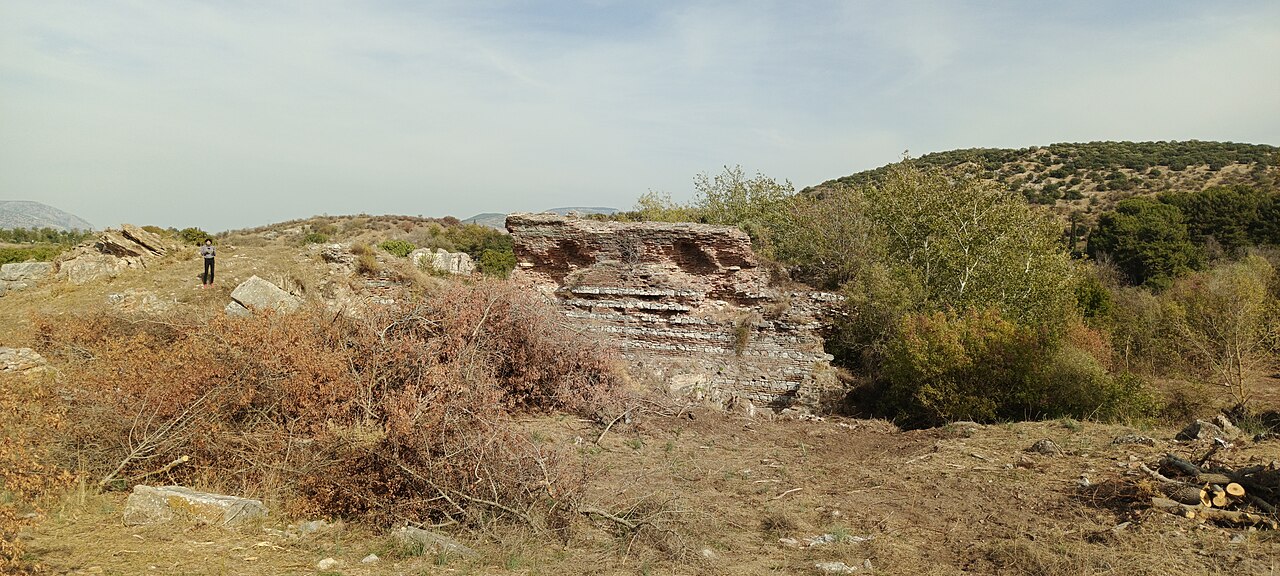
Check the current official site information before travelling, including the available entrance, permitted paths and any conservation restrictions. Access around archaeological structures can change. If the Harbour Baths are not on your intended route, a licensed guide can explain their position from an accessible viewpoint; do not cross a barrier to reach a photograph's angle. Uneven stone surfaces call for steady shoes, water and time to walk without hurrying.
If you are visiting from a cruise ship, share your docking and all-aboard times before asking to add the harbour quarter. The route and return margin need to be checked against your actual port day. Our private Ephesus tour from Kuşadası Port describes the usual planning questions, while the team confirms any requested stops in a written itinerary. A bath complex is most interesting when you have time to place it in the city, not merely to collect another ruin photograph.
Finally, look once more toward Arcadian Street and the former harbour. UNESCO's port-city description gives the broad historical frame; the bath-gymnasium remains give that frame a human scale. They speak of bodies exercising and bathing near a busy urban edge, of rebuilding across centuries, and of a waterfront that has since changed. That is a richer Ephesus story than a single monument can tell.
Sources and further reading
Explore Ephesus / Harbour Quarter with context.
Review the route and inclusions before requesting your own private itinerary.
EXPLORE THE EPHESUS PORT TOUR