
The Temple of Artemis is often introduced as one of the Seven Wonders of the ancient world. That description can create the wrong expectation for a modern visit: an enormous marble temple waiting at the end of a path. The Artemision near Selçuk is instead a place where a small amount of visible stone opens onto a much larger story. Its setting connects the religious centre of an earlier Ephesus with the later Roman city, the changing coastline and the town that visitors encounter today.
Begin with the landscape, not a reconstruction
UNESCO describes Ephesus as a series of settlements that changed location as the shoreline moved west. The sanctuary of the Ephesian Artemis belonged to that long, shifting landscape. It was not simply another building along the marble streets of the Roman archaeological site. Its remains stand in the wider Selçuk area, where the history of Ayasuluk Hill and the earlier city helps explain why a visitor cannot understand Ephesus from one entrance or one famous facade.
The World Heritage listing identifies the Ayasuluk Hill, Artemision and Medieval Settlement component separately from the ancient city component. That distinction is useful when planning a day. A trip to the Library of Celsus does not automatically bring you to the sanctuary, and a visit to the sanctuary cannot stand in for a walk through the Roman city. The two places tell connected but different chapters of the same regional history.
Why the sanctuary mattered
The Austrian Archaeological Institute calls the Artemision the main sanctuary of the city of Ephesos. UNESCO traces the Ephesian Artemis tradition to an Anatolian mother-goddess setting and describes the sanctuary as one of the largest and most influential in the ancient world. It attracted visitors from across the Mediterranean. Those facts are more revealing than a list of architectural superlatives: the site was a place of worship, civic identity and encounters between local and distant communities.
It is tempting to picture a single moment when the temple was complete and then compare every remaining stone with that imagined peak. Archaeology asks a broader question. Sanctuaries develop over time. Earlier phases, rebuilding, later use and the changing relationship between religious space and the city all matter. The Austrian institute continues to study the Artemision through material evidence and the wider setting of the sanctuary. That continuing research is a reminder that the place is not a finished illustration of a textbook image.
The local tourism authority lists the Temple of Artemis among Selçuk's principal historic places, alongside the ancient city and other sites. Seen in that company, the sanctuary is not a remote curiosity. It is one of the anchors of the area's layered heritage, even though its surviving architecture is much less visually complete than Ephesus's Roman monuments.
What remains, and what photographs cannot explain
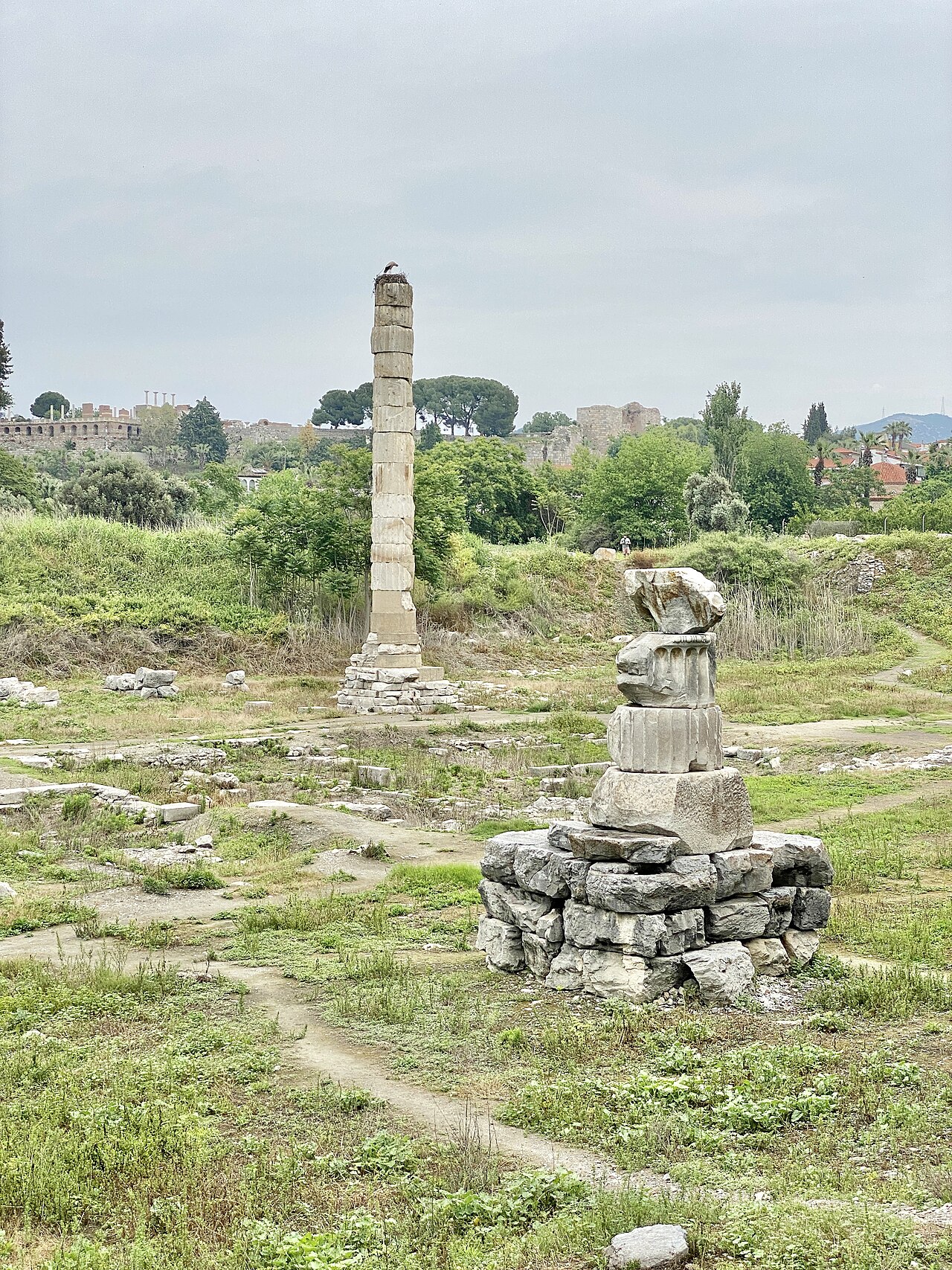
UNESCO states plainly that little remains of the famous temple. The standing column and low masonry do not outline a fully preserved building. They give you reference points within an archaeological landscape rather than a ready-made reconstruction. Before trying to imagine the temple's height, pause over the ground: where is the visible masonry, how much open space surrounds it, and how does the site relate to the modern town?
Photographs are especially sensitive to framing here. A close-up of the column can suggest a more complete structure than the site actually preserves. A wide view can make the archaeological traces look almost invisible. Both are useful if their limits are understood. The first helps you notice material details; the second restores a sense of scale and context. Neither should be treated as a photograph of the temple as it once stood.
A discovery that changed the map
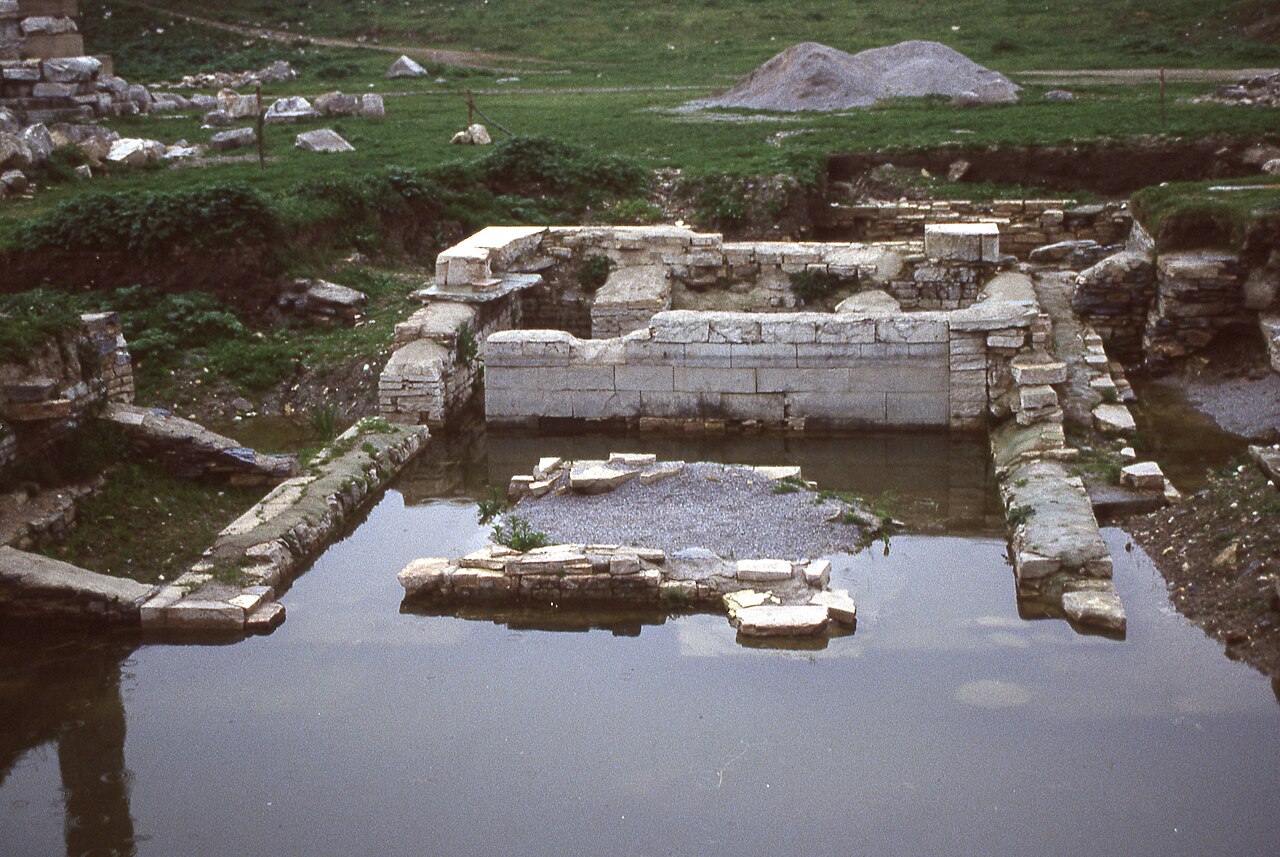
The Austrian Archaeological Institute's research history records John Turtle Wood's search for the Artemision on behalf of the British Museum, beginning in the 1860s. Wood's investigations also uncovered other buildings while the sanctuary's location remained uncertain. The institute dates the discovery of the temple to 1870. That story is worth remembering at the site: the sparse remains were not always an obvious destination, even to people specifically looking for one of antiquity's best-known sanctuaries.
Modern work has moved beyond the search for a celebrated building. Archaeologists study where a sanctuary sat within its environment, how it was used and how the surrounding land changed. UNESCO's description of the shifting shoreline and successive settlements gives visitors a simple way into those questions. The Artemision makes more sense as part of an evolving region than as an isolated checklist item.
Put it beside the rest of Ephesus
If your day includes the Roman city, compare the two experiences rather than ranking them. At the Library of Celsus or the Great Theatre, monumental remains still structure the visitor's view. At the Artemision, the visitor must do more interpretive work. Read the available site information, compare a close view with the surrounding landscape and leave room for uncertainty. The contrast is itself instructive: preservation is uneven, and the most historically important place is not always the most photogenic one.
Our Temple of Artemis guide introduces the monument, while the Ephesus walking-route guide helps place the Roman city's main landmarks in order. For a guided visit, review the published route of a private Ephesus tour and ask whether a stop at the Artemision can be included in the written itinerary. Do not assume that a separate site is included merely because the tour mentions Ephesus.
Practical questions before you go
Check the official museum information shortly before your visit for current access, admission and opening arrangements. They can change, and this article deliberately does not fix a ticket price or last-entry time. Confirm your transport and the sequence of stops if your day also includes the Roman archaeological site, the museum or other places around Selçuk. A short, considered stop may be more rewarding than trying to see every landmark without context.
Bring footwear suitable for outdoor ground and follow any on-site barriers. Avoid climbing on ancient fabric or removing even small fragments. Take one photograph that records the wider setting as well as the famous column. Later, it will help you remember what makes the Artemision distinctive: not a surviving Wonder in miniature, but a trace of a sanctuary that shaped the life of Ephesus for generations.
Sources and further reading
- UNESCO World Heritage Centre: Ephesus
- UNESCO: Ephesus property components and maps
- Austrian Archaeological Institute: Cult and Sanctuary
- Austrian Archaeological Institute: Research history of Ephesos
- İzmir Provincial Directorate of Culture and Tourism: Selçuk
- Türkiye Museums: current Ephesus visitor information
Explore Ephesus with context.
Review the route and inclusions before requesting your own private itinerary.
EXPLORE PRIVATE EPHESUS TOURS