
The ruins of Roman Ephesus draw the largest crowds, but the hill above modern Selcuk tells a different part of the same story. Ayasuluk Castle rises beyond the Basilica of St John, its walls making a clear shape against the sky. A visit here is not simply a search for a panoramic photograph. The fortifications, entrances and later buildings help explain how the focus of settlement shifted as Ephesus changed over many centuries.
Why Ayasuluk belongs to the Ephesus story
UNESCO presents Ephesus as a landscape of successive settlements rather than a single city frozen in the Roman period. It describes occupation on Ayasuluk Hill long before the best-known ancient-city ruins, then later movement between sites as the coastline and the region's needs changed. That broad view makes the castle more than an optional add-on. It stands above one of the places through which the history of Ephesus continued.
Türkiye's museum service calls Ayasuluk the "first and last Ephesus." The phrase is a useful invitation to look beyond one era, not a claim that the surviving castle walls date from the earliest settlement. The museum identifies the inner fortress walls at the hill's highest point with the Seljuk and Ottoman periods. Earlier occupation of the hill and the visible medieval fortification are related chapters, but they should not be collapsed into one building date.
Read the walls before the view
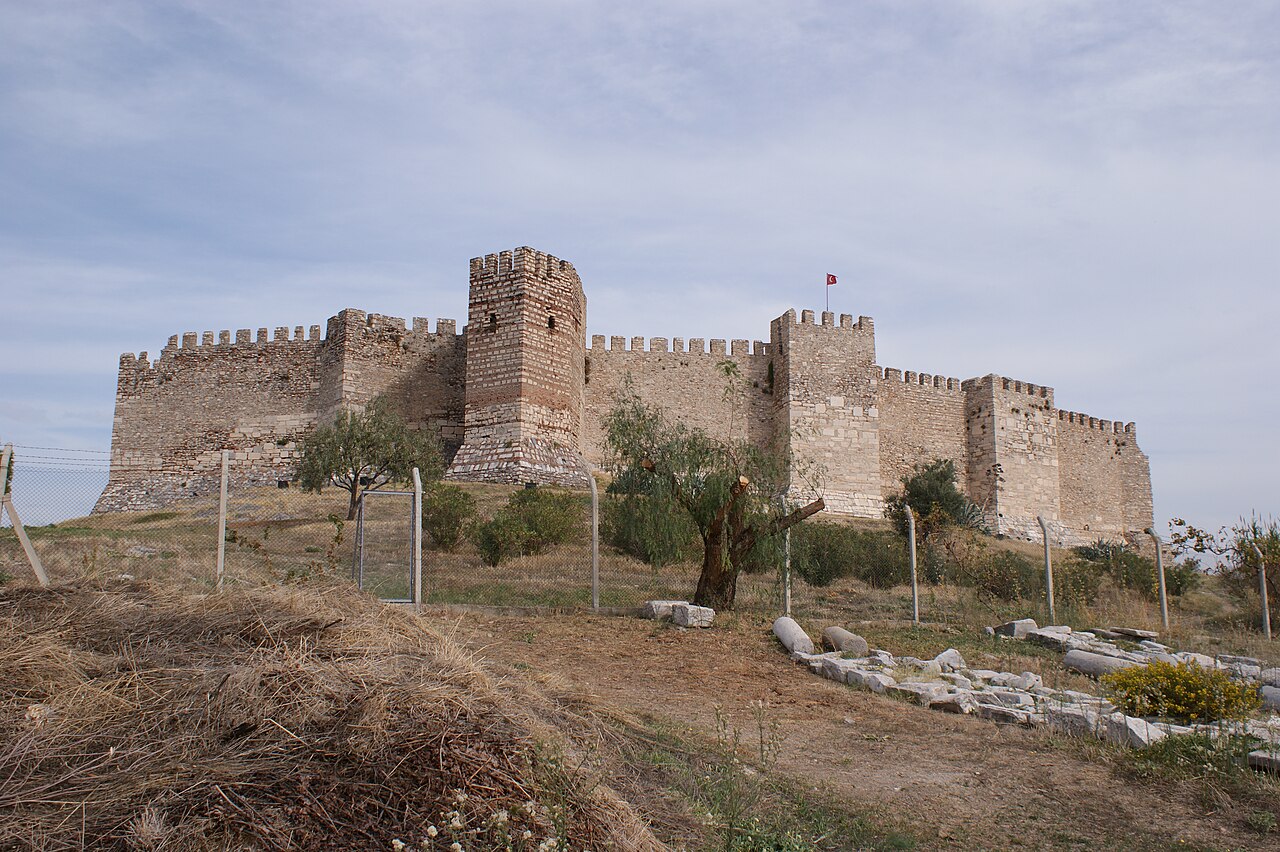
From outside, the walls and towers give the castle a unified silhouette. Inside, the impression changes. Gaps, different levels and surviving fragments show that a fortified place was also a working enclosure. The museum lists entrances on the west and east sides of the inner castle. As you move around, consider why a controlled entrance matters on a hill whose slopes already offer a natural boundary.
Look closely at the masonry without assuming that every visible course belongs to one construction campaign. A long-lived site may be repaired, adapted and conserved. UNESCO notes that parts of the Ephesus World Heritage property have undergone reconstruction and stabilisation. The material in front of you can still speak clearly, but an interpretation panel is a better guide to a specific phase than colour or stone size alone.
The view outward is part of the experience too. Rather than taking only one wide photo, turn to see how the castle relates to the basilica below, the town and the surrounding landscape. This is a reminder that a defensive site was positioned to observe routes and settlement, not to serve as an isolated scenic platform. Keep the distinction between what the present view suggests and what archaeology can prove.
More than an empty enclosure
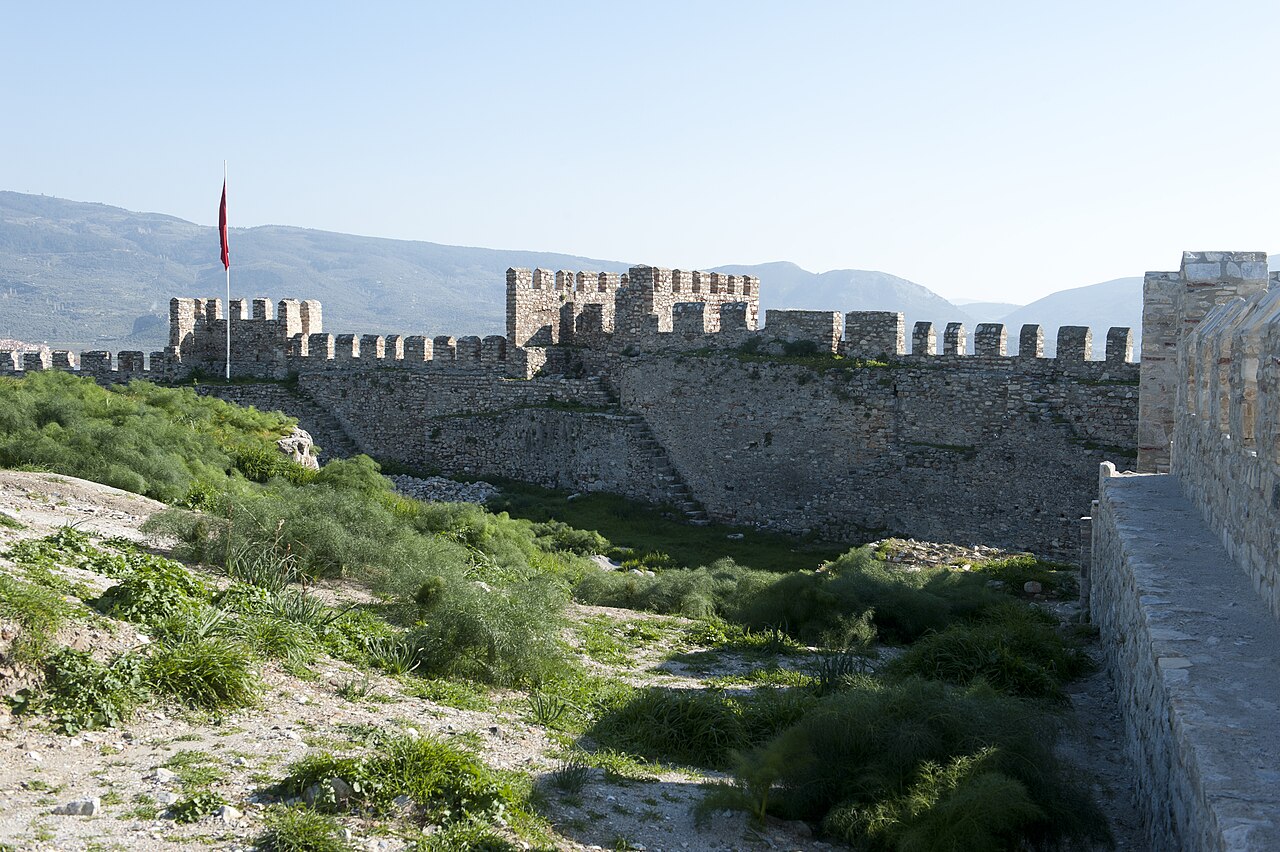
The official museum description names features inside the castle: cisterns near the gates, a mosque with a partly surviving minaret, a mansion, a bath and another cistern farther west. These details matter because they shift the question from "How strong were the walls?" to "How did people occupy the space within them?" Water storage, worship and domestic or administrative buildings point to a place used in more than one way.
Do not expect every listed feature to be immediately legible from a visitor path. Some remain as partial foundations; others may be behind barriers or require on-site interpretation. The castle is most rewarding when you connect a visible structure to the plan as a whole rather than assigning names to every low wall from memory. A short pause at an information board can change how you read the next stretch of ground.
The basilica and the later town
Below the inner castle, the Basilica of St John occupies the southern part of Ayasuluk Hill. The museum explains that an earlier church was replaced by a sixth-century basilica associated with Emperor Justinian and Theodora. UNESCO places the basilica within Ephesus's early Christian landscape and also points to the nearby Isa Bey Mosque and medieval settlement as evidence of later Seljuk and Ottoman phases. The monuments are close in space, but not identical in date or purpose.
Our Basilica of St John guide gives the church its own historical treatment. Read it separately rather than imagining the castle as simply part of the basilica. The two sites make a strong pair precisely because they show different uses of the hill: pilgrimage and worship below, fortification and later occupation above. Our Artemision article adds another nearby layer to that changing landscape.
Plan a careful visit
Check the official Ayasuluk Castle listing before setting out. Admission arrangements, opening hours and access to particular parts of a monument can change, so this article does not promise a fixed price or schedule. The hilltop setting and uneven ground call for comfortable shoes and a pace that allows you to stop safely. Stay on marked routes, respect barriers and do not climb fragile masonry for a better angle.
If you are arranging a private day, the published Ephesus and biblical heritage tour includes the Basilica of St John when the schedule allows. Ayasuluk Castle is not a standard promised stop on that itinerary; ask whether it can be added to a written plan, allowing time for separate admission and access conditions. A focused visit to the castle may be more satisfying than trying to compress every Selcuk monument into a quick pause.
Ayasuluk Castle rewards visitors who look past its outline. Inside the walls is evidence of a place adapted to new periods and needs, while the wider hill connects the Roman city, Christian pilgrimage and later settlement. Seen this way, the castle does not compete with Ephesus's famous ruins. It helps explain why the area's story continued after them.
Sources and further reading
Explore Ephesus with context.
Review the route and inclusions before requesting your own private itinerary.
EXPLORE BIBLICAL EPHESUS TOURS