
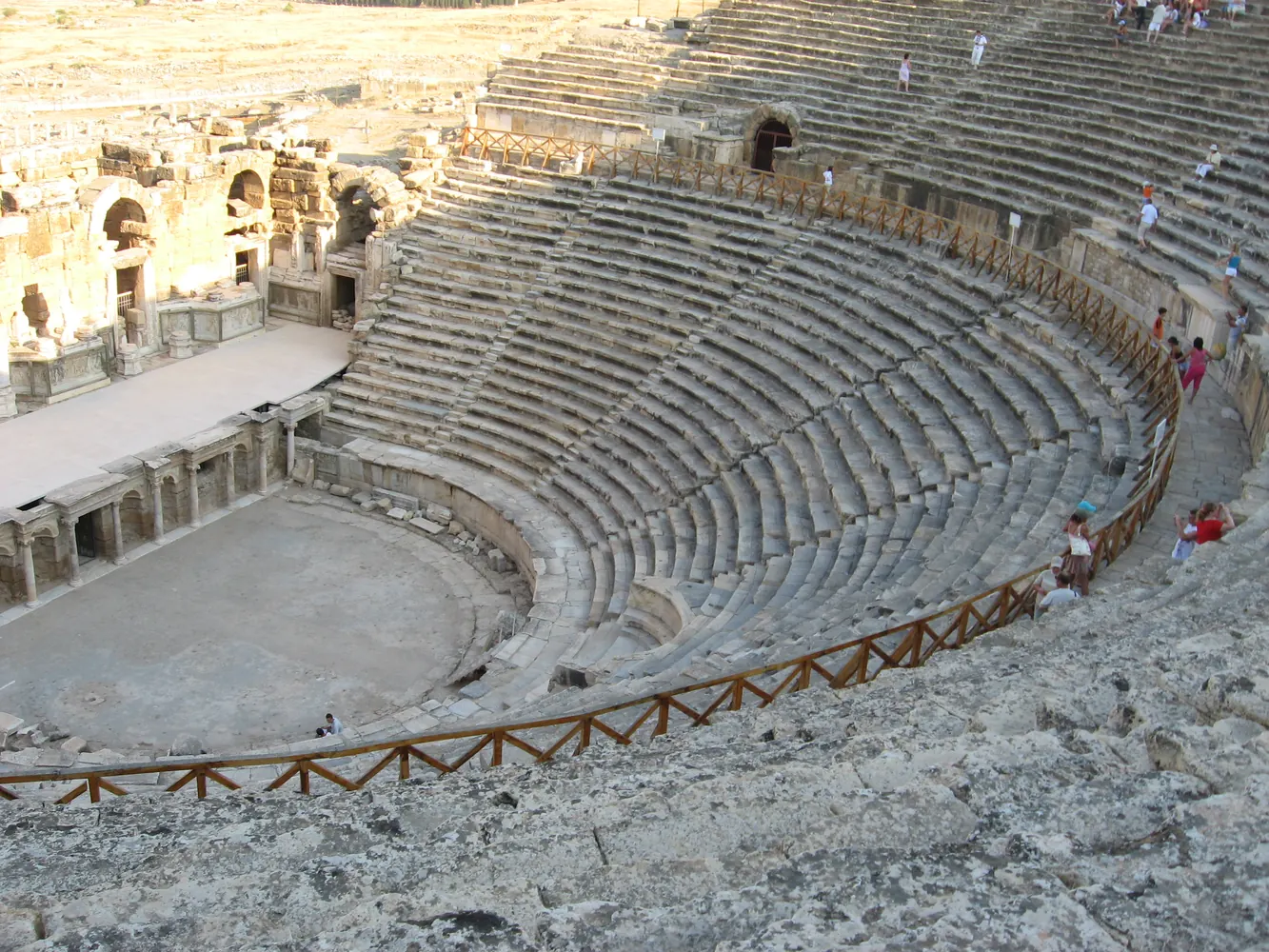
Pamukkale's white terraces often get the first photograph. A short walk into the archaeological landscape reveals a very different sight: the Roman theatre of Hierapolis, set against the hillside above the ancient city. Its steep tiers and substantial stage building make it one of the clearest places to understand that Pamukkale is more than a natural spectacle. People came here for water, worship and urban life, and the theatre gave that city a public gathering place.
One landscape, two stories
UNESCO lists Hierapolis and Pamukkale together as a single World Heritage property. Mineral-rich spring water made the travertine slopes; the settlement developed beside that unusual environment. The theatre belongs to this shared story. It was not built as a viewpoint for the terraces, even though today's visitor can read both the natural and human landscape from its upper levels. It was part of a city with baths, streets, temples, a necropolis and, later, Christian buildings.
The Attalid rulers of Pergamon established Hierapolis near the end of the second century BCE. Roman control and later rebuilding reshaped the city, and UNESCO describes particular prosperity in the second and third centuries CE. The surviving theatre is associated with the Severan period. Those broad dates matter more than a single dramatic construction year: monuments were built, decorated, repaired and reused over time.
Read the theatre from the seats to the stage
Begin with the curved seating, often called the cavea. The rows climb the hillside, giving the space its imposing scale. From high up, look down toward the orchestra and the stage building rather than trying to take in the entire monument at once. The geometry explains how a large audience could face a shared point of attention. It also shows how the natural slope was used as part of the architecture.
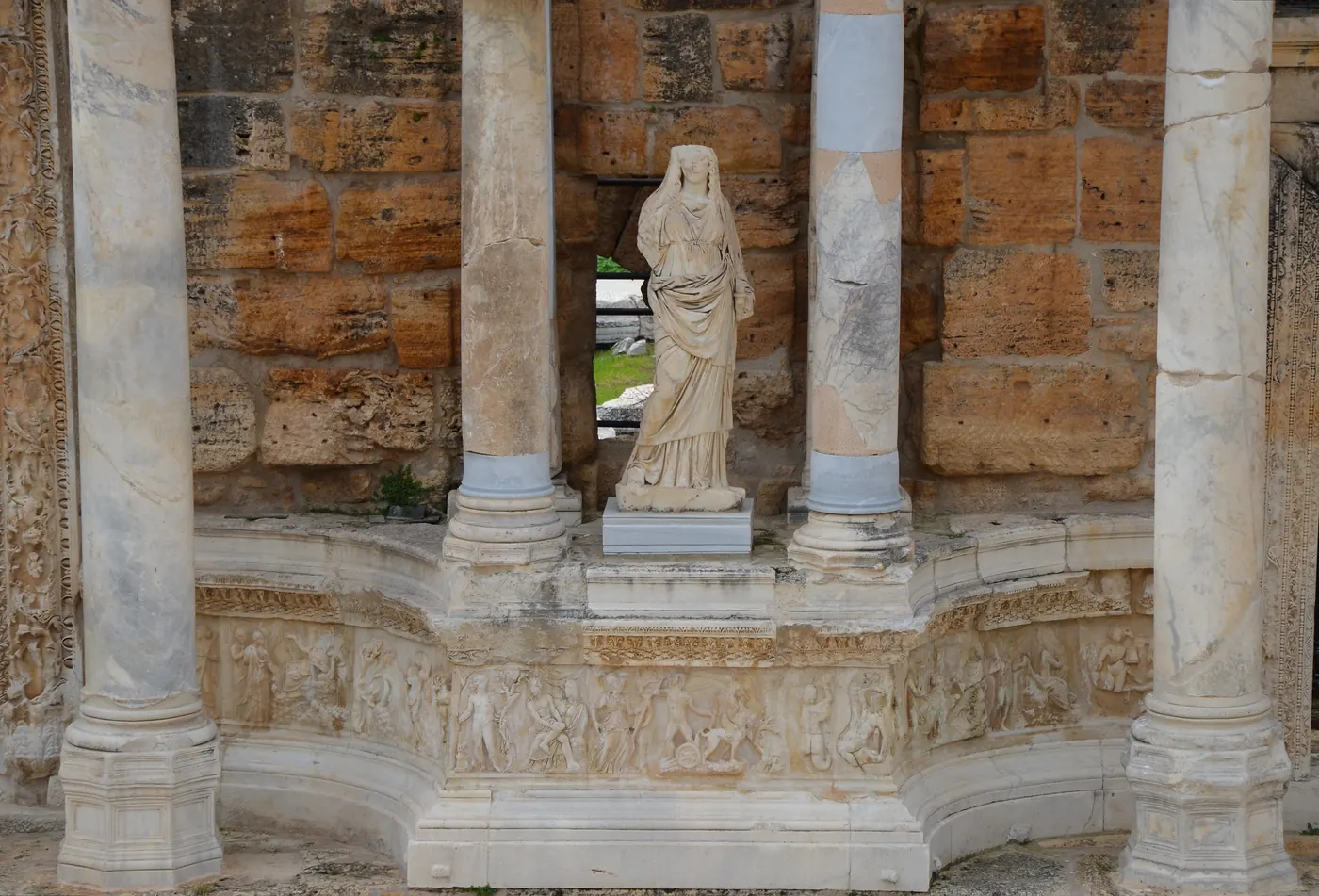
Then shift your attention to the stage facade. Much of what makes Hierapolis distinctive is here: columns, niches and sculptural decoration gave performers a monumental backdrop. Türkiye's Denizli Provincial Directorate of Culture and Tourism highlights the theatre's restored stage building and its mythological reliefs. Restoration helps a visitor understand the architectural composition, but it is worth remembering that visible stonework may include both ancient fabric and carefully documented reconstruction.
Do not treat the reliefs as a single illustration. UNESCO draws attention to a procession and a sacrifice connected with Artemis of Ephesus. The local museum account describes a wider group of mythological scenes, including Apollo and Artemis, Dionysian figures and the story of Persephone. The best way to approach the imagery is to notice the repeated figures, movement and framing first, then use official interpretation to identify particular episodes. An uncertain figure should remain uncertain rather than receive a confident label from a hurried glance.
What remains on the stage, and what moved to the museum?
Some fragments are best understood at the theatre itself; others are protected and displayed elsewhere. The official Pamukkale Archaeological Museum describes a room devoted to finds from the theatre's stage building. It notes that some reliefs remain in place while copies stand in for other pieces whose originals are kept in the museum. This is a useful reminder that the monument and the museum are complementary. A visit to the stage shows the scale and setting; the museum can bring individual sculptural details closer to the eye.
That distinction also guards against a common misunderstanding. A complete-looking facade does not mean every visible element has stayed in exactly the same position since antiquity. Conservation can involve reinforcement, reassembly and replacement where original pieces must be sheltered. UNESCO describes ongoing archaeological work and restoration at Hierapolis. Rather than diminishing the experience, knowing this makes the choices behind preservation part of what you see.
How to fit the theatre into a Pamukkale day
Allow time for both sides of the World Heritage site. The travertines are visually immediate, while the theatre rewards a slower look. A route can move between the permitted terraces and selected city remains, with the theatre as an anchor, but the best order depends on the entrance, weather, access restrictions and your available time. Do not assume every pool or path seen in an older photograph remains open. Follow current signs and barriers; they protect fragile formations and archaeological surfaces.
The walk through an ancient site can involve exposed sun and uneven ground. Bring water, use footwear suited to stone paths and leave room for breaks. From the upper seating, take a moment to orient yourself before descending. On the way out, consider how the theatre relates to the city's other spaces rather than treating it as a separate photo stop. The necropolis, baths and religious monuments show how many different activities once belonged to the same settlement.
Check the responsible museum service and local authorities for current entry conditions shortly before travel. Opening arrangements, optional facilities and ticket prices can change, so this article does not state a fixed fee or hour. The route and admission terms of any guided visit should also be confirmed in writing. Our private Pamukkale and Hierapolis tour lists the theatre among its planned archaeological stops, while site admission and optional pool access are excluded from its published starting price.
A view that changes the visit
It is easy to arrive at Pamukkale expecting only white terraces. The theatre changes the scale of the visit: a place shaped by water was also shaped by public architecture, performance, art and successive communities. Look from the seats toward the stage, then outward over Hierapolis. The connections become easier to see. If your wider trip also includes the Aegean coast, our Ephesus travel guide offers separate planning context for that destination; it does not imply an Ephesus stop is included in a Pamukkale day.
Sources and further reading
Explore Pamukkale with context.
Review the route and inclusions before requesting your own private itinerary.
EXPLORE THE PAMUKKALE TOUR