
A day around Ephesus can move across many centuries in a short distance. Near the Basilica of St John on Ayasuluk Hill stands Isa Bey Mosque, a building that asks visitors to look beyond the Roman city and the early Christian monuments. Its walls, courtyard and richly worked entrance belong to another chapter of Selcuk's history. Seeing them together makes the landscape feel less like a set of isolated attractions and more like a place repeatedly shaped by new communities.
Where the mosque fits
The Izmir Provincial Directorate of Culture and Tourism places Isa Bey Mosque on the western slope of Ayasuluk Hill, close to St John's Basilica. It dates the building to 1375 and names Isa Bey as its patron. This was centuries after the best-known streets and monuments of Roman Ephesus. The mosque should therefore be understood on its own terms, not treated as a Roman ruin merely because it lies within the same visitor landscape.
UNESCO's description of the Ephesus World Heritage property is useful here. It identifies the mosque and the medieval settlement on Ayasuluk Hill as markers of the arrival of Seljuk and Ottoman Turkish traditions in the area. The property includes traces of several periods, and each has a different architectural language. From a viewpoint near the hill, try to locate the mosque in relation to the basilica and the castle. Their proximity invites comparison, but it does not make them contemporary buildings.
Start with the building, not the label
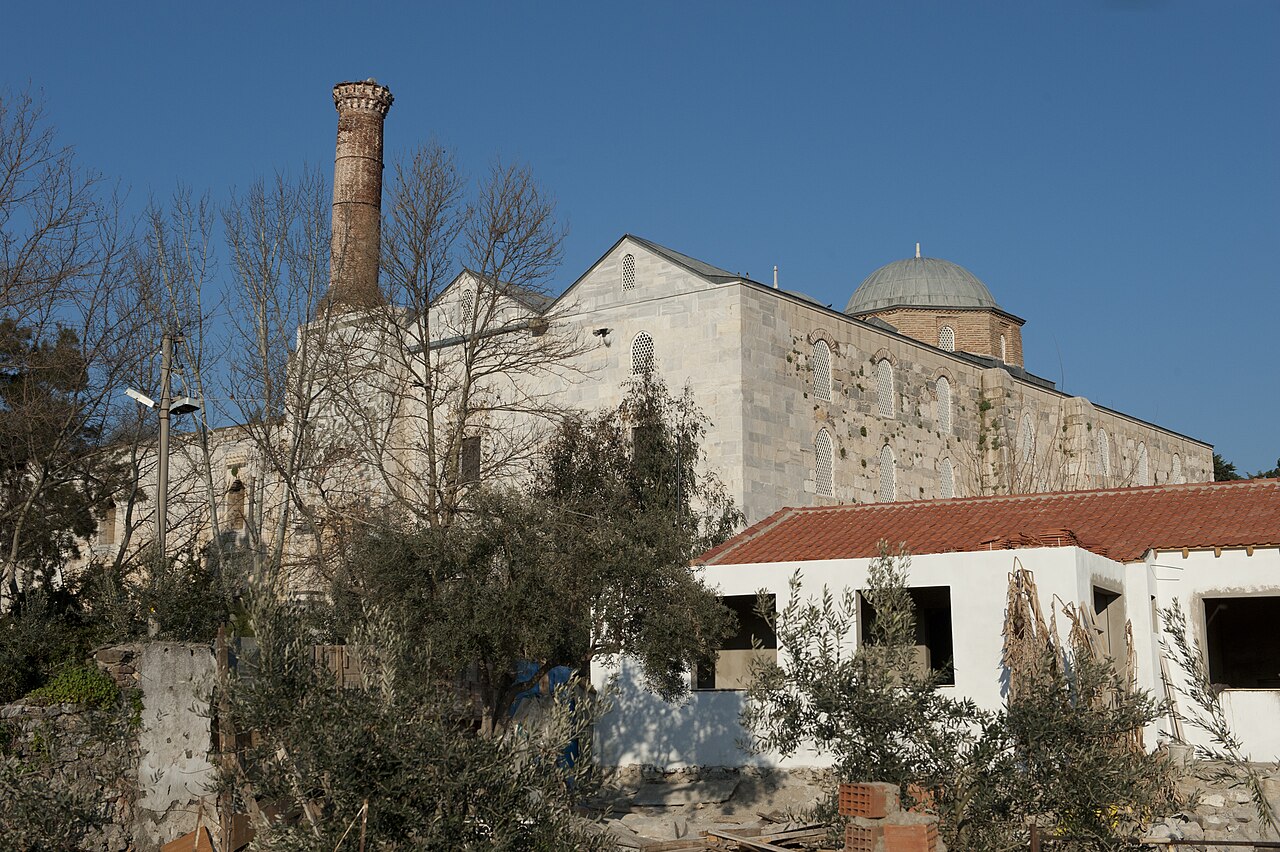
Before searching for decorative detail, notice the broad masses of the exterior: a long stone wall, the roofline, domes and the remaining minaret. Their arrangement gives the mosque a different silhouette from the nearby basilica. The Izmir tourism directorate describes it as an early example of a courtyard mosque with Anatolian columns and highlights the monumental height of its main gate. Those are useful features to look for on site rather than simply memorise as historical claims.
The same official source links the building to Seljuk architectural traditions. An Izmir tourism brochure also identifies reused architectural elements among its columns, including material associated with the Temple of Artemis. Reuse can be part of a building's history, but it is easy to overstate what a visitor can identify by eye. Do not assume every column came from the Artemision, or that an individual stone's origin is obvious without archaeological documentation. The more interesting question is how an older material found a new role in a later design.
Look as well at the relationship between solid walls and openings. A building can feel restrained from one side and highly expressive at its entrance. That change in emphasis helps guide movement: an approach, a threshold, then the courtyard and prayer space. The sequence is a good way to read the mosque even if some areas are not accessible during your visit.
A courtyard made for a pause
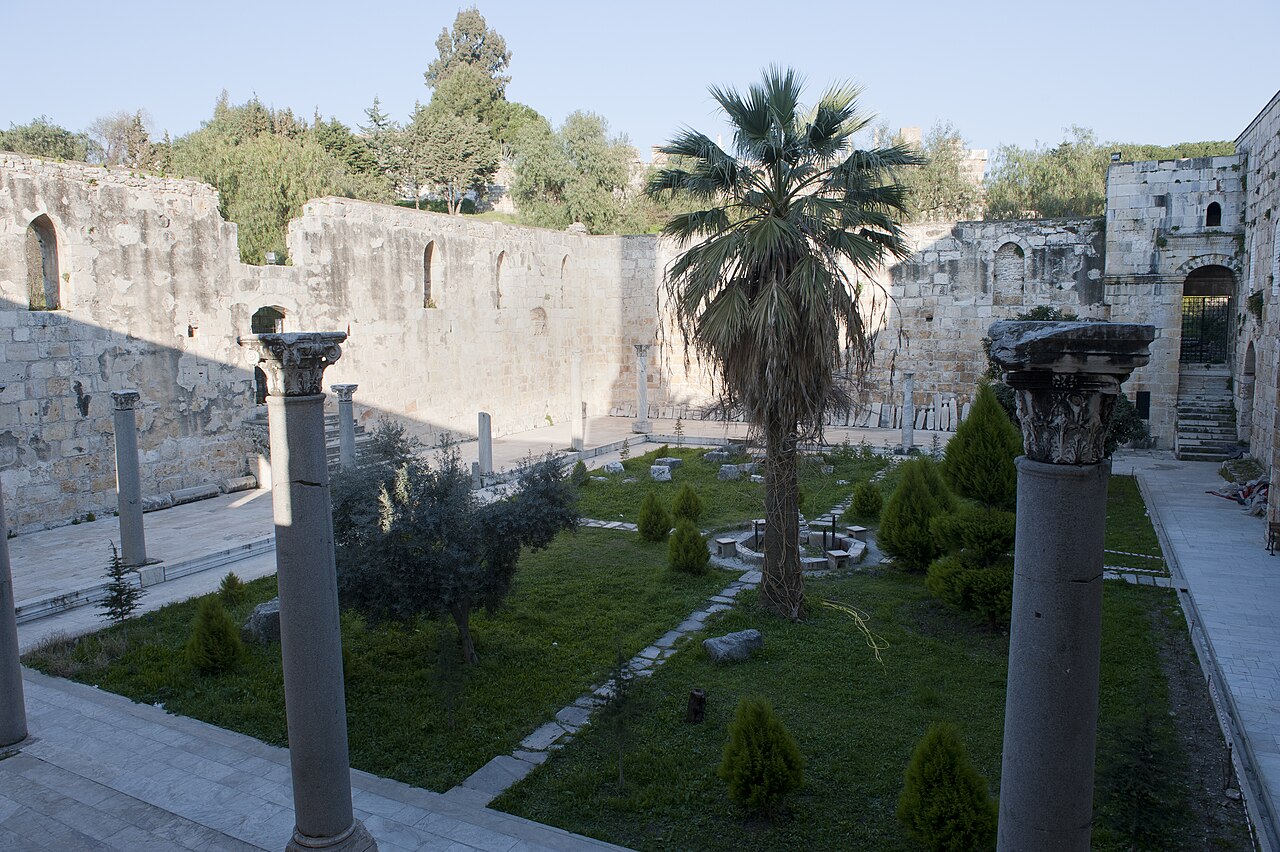
Where access permits, the courtyard offers a different scale from the exterior. Columns and enclosing walls create a place to slow down before entering the covered part of the mosque. Compare the quieter spatial rhythm here with the monumental effect of the gate. The building does not need to be reduced to one photograph: a wide view communicates its plan, while a detail reveals the care invested in a threshold or capital.
The courtyard also makes the relationship between preservation and present use visible. The site is an historic structure, but it is not simply a display case. Follow current signs and any directions given by staff or worshippers. Some spaces may be reserved, temporarily closed or in use for prayer. Treat a quiet pause as part of the visit rather than an interruption to a sightseeing schedule.
The portal rewards a closer look
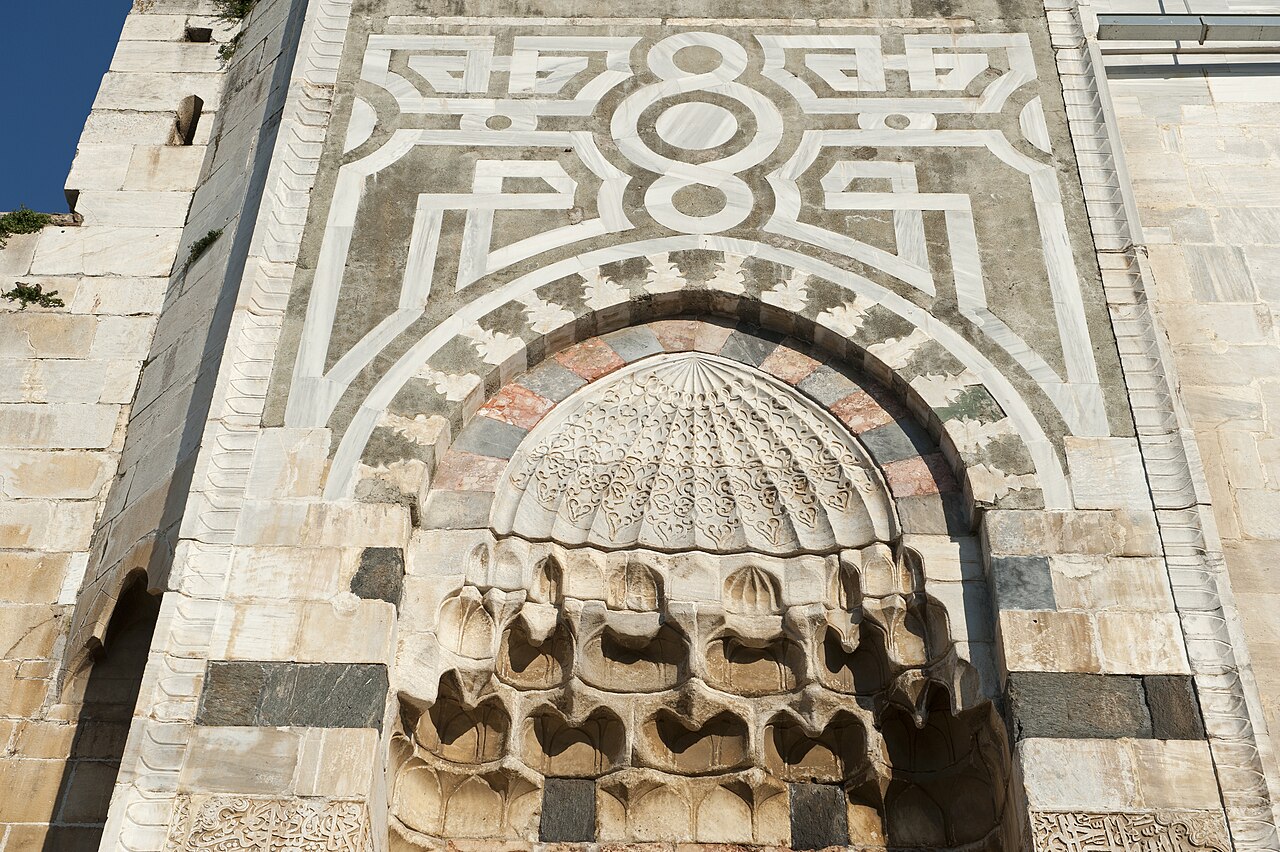
At the monumental entrance, geometry and carved surfaces give the building a more intricate voice. Stand far enough back to see the portal's full shape, then move closer to study how bands of different stone tones and recessed carving frame the opening. The Izmir tourism directorate singles out the gate's height and decoration as defining features. A close view helps explain why: the ornament is not an afterthought pasted onto a wall. It directs attention to the act of entering.
Details invite description, but not every visual resemblance proves a direct historical connection. It is safer to note the layered arch, patterned stone and carved niches than to assign each motif to a single distant origin without a source. For a visitor, the portal is a practical lesson in looking carefully: shift between the entire composition and the smaller units that create it. The two views reveal different qualities of the same work.
Read Ayasuluk as a whole
After the mosque, turn your attention back to the hill. Our Ayasuluk Castle guide explains the fortification above, while the Basilica of St John guide focuses on the neighbouring Christian monument. Reading them alongside the mosque avoids forcing all three places into one period or one story. The monuments are close enough to visit together, yet their purposes, patrons and surviving forms differ.
A walk here can also change the way you think about Ephesus itself. UNESCO presents the wider property as a settlement landscape shaped by environmental and social change over time. A Roman street, a basilica and a later mosque are not interchangeable symbols. Together they show how the region remained meaningful to different communities long after a single urban centre changed form.
Plan a respectful stop
Check local access arrangements before travelling. Opening, entry and photography conditions can change, and a mosque's use for worship may affect when visitors can enter particular spaces. Dress respectfully, keep voices low and do not interrupt prayer. If a space is closed, the exterior and surrounding hill still provide worthwhile views. Uneven ground around historic buildings also calls for comfortable shoes and attention to barriers.
Our private Ephesus tour covers the area's principal ancient-city sights. Isa Bey Mosque is not a guaranteed stop in the published itinerary; ask for a custom visit in the written plan if it matters to you, and confirm access separately. Giving this building its own time is more rewarding than treating it as a quick photograph between larger stops.
Isa Bey Mosque does not compete with Ephesus's famous ruins. It completes another part of the local picture: an architectural work with a distinct date, function and visual language, standing in conversation with the older monuments around it. A few attentive minutes at its gate and courtyard can make the many-layered history of Selcuk much easier to see.
Sources and further reading
Explore Ephesus with context.
Review the route and inclusions before requesting your own private itinerary.
EXPLORE PRIVATE EPHESUS TOURS