
In the square beside the Library of Celsus, it is easy to give all your attention to the library’s restored façade. Turn slightly and another monument changes the story of the space: the Gate of Mazaeus and Mithridates. Its openings led toward the commercial agora. The gate was not simply a picturesque frame for a photograph; it marked a passage between a public square and a place of exchange. Pausing here helps visitors read Ephesus as a connected city rather than a collection of famous façades.
A threshold beside the library
The Ephesus World Heritage nomination identifies the gate as an entrance from the library quarter to the Tetragonos Agora, the city’s commercial market. Curetes Street meets the square nearby. Imagine arriving along the street, entering the open space, then passing through the gate toward a large market enclosure. That movement is the point of the monument. A photograph taken from one side can show its architecture, but walking the permitted route reveals why an entrance stood here.
Do not confuse this gate with the Magnesian Gate, a different entrance on the edge of ancient Ephesus. The Gate of Mazaeus and Mithridates belongs to the area beside the Library of Celsus and the commercial agora. The distinction matters because Ephesus had several gateways serving different streets and purposes. On a site map, check both the monument name and the neighbouring structures before attaching a historical story to a photograph.
Look closely at the openings
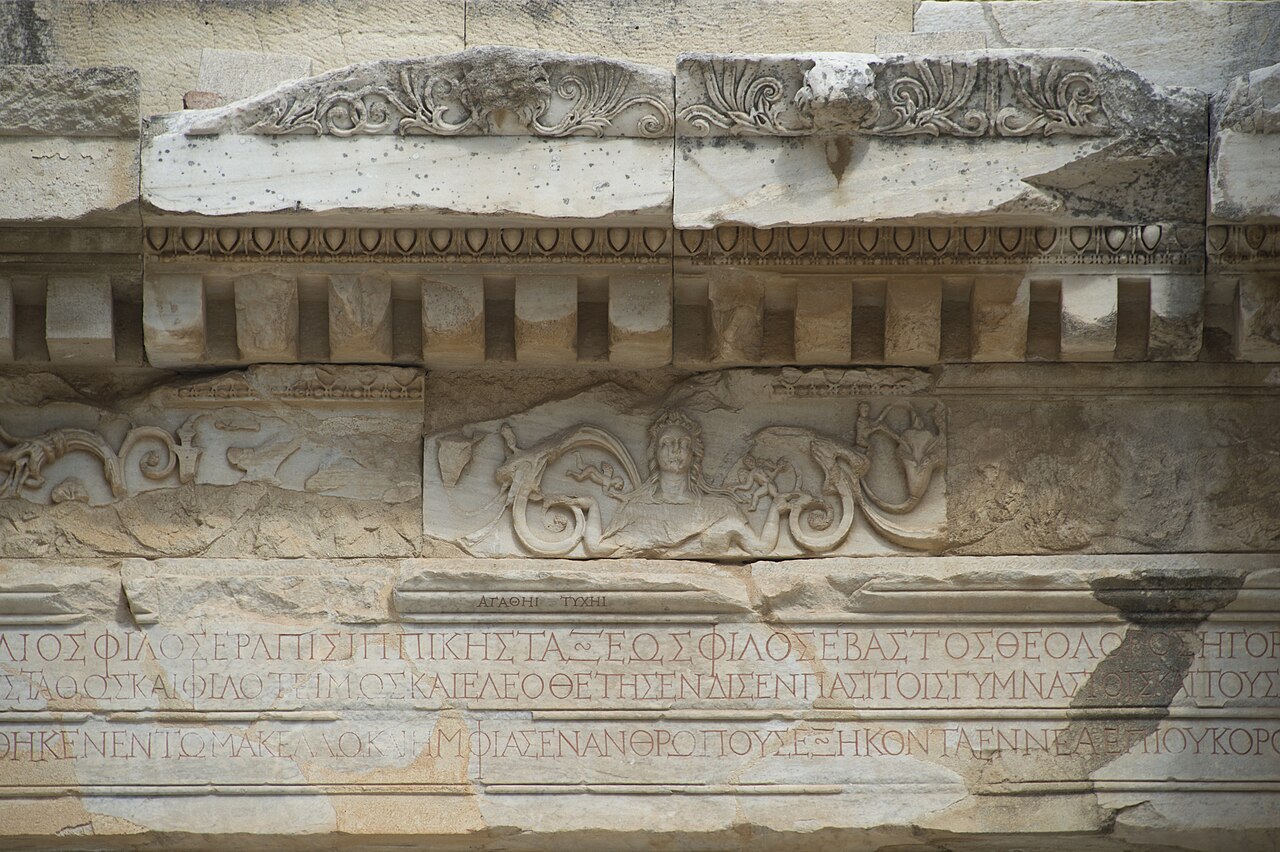
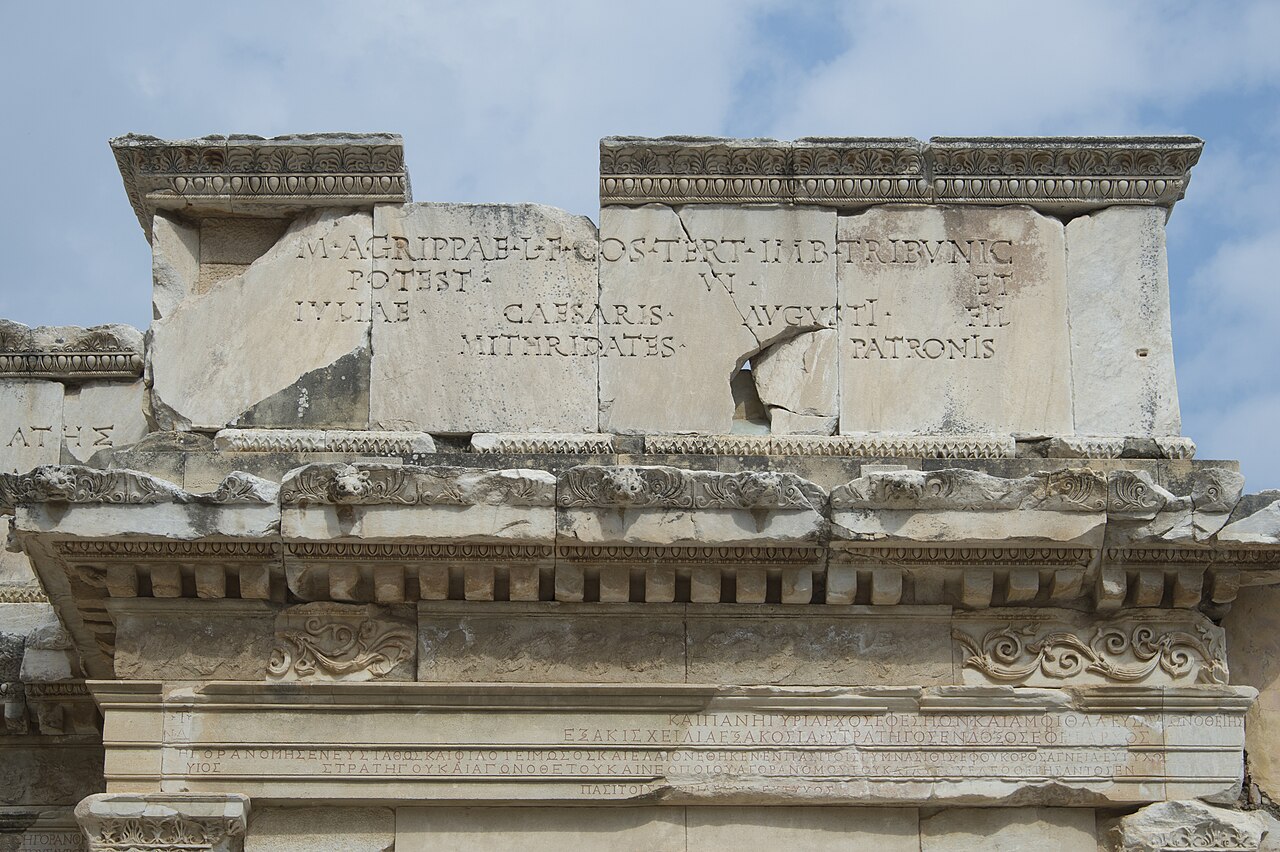
The nomination file describes the south gate of the Tetragonos Agora as an architectural composition with arched openings and decorated door frames. It mentions niches and ornamental elements above them. These features made the passage more than a practical hole in a boundary. It was part of the presentation of a prosperous Roman city. Stand far enough back, where the visitor route allows, to see the whole gate. Then notice how its openings divide the view toward the market side.
At closer range, look for the difference between solid blocks, open passages and reconstructed elements. The nomination records restoration of the gate together with the Library of Celsus in the late twentieth century. What you see is archaeological material that has been studied, conserved and re-erected, not a structure untouched since antiquity. This is an important part of the monument’s story. Restoration helps visitors understand the original architectural relationship, while the surviving stone remains the evidence to examine.
What a market entrance tells us
The word “agora” can mean different kinds of civic space. Here the nomination specifically calls the Tetragonos Agora a commercial market. It also distinguishes the State Agora farther up the city, reached along Curetes Street. That difference turns the gate into a useful orientation point. Behind one threshold was a trading area; farther along the street was another public quarter with administrative buildings. Ephesus was organised through connections among these spaces, not through one central square that served every purpose.
Think about the people who might have crossed the threshold: traders, residents and travellers moving between streets and the market. That is a reasonable way to imagine the gate’s role, though no individual journey can be reconstructed from the standing stones. The architecture tells us where movement was channelled and what kind of public space lay beyond. It does not tell us what a particular person bought on a particular day. Keeping that distinction makes the ancient city feel more real than an invented anecdote would.
The nearby Library of Celsus expresses a different kind of public memory. Compare the library’s tall façade with the gate’s passageways before moving on. Both have been carefully presented to modern visitors, but they served different roles. For a wider account of movement through the city, our harbour, market and streets guide connects this quarter to the former port landscape without reducing the gate to an isolated landmark.
How to see it on a visit
Begin from a permitted point in the library square and take in the full relationship between the gate, the library and the approach from Curetes Street. Then move closer only along the marked visitor path. Look from the opposite permitted side if access allows. A change in viewpoint can clarify how the openings led toward the agora. Do not climb the masonry or step into closed areas to recreate a photograph. Conservation boundaries and walking routes can change, so follow the signs on the day.
Photographs are most useful when their captions say exactly what they show. One wide image can record the gate in its setting; a second can show an architectural detail. Avoid labelling an image of the library as the gate, or treating a modern reconstruction as if every stone remained in place from the Roman period. If you are travelling with others, take a minute to compare the two monuments before moving toward the agora. That brief stop can give the rest of the walk a clearer direction.
Check official Ephesus visitor information close to your travel date for current access, admissions and any conservation notices. Exposed streets can be uneven and sunny, so comfortable shoes, drinking water and time for unhurried stops help. We do not quote a fixed opening hour or ticket price because those details change. On a private visit, ask your guide to explain the difference between the commercial and state agoras while you stand at the gate rather than trying to absorb the city’s plan later from memory.
Our private Ephesus tours can provide a framework for discussing the library quarter; confirm your particular route and inclusions before booking. The Gate of Mazaeus and Mithridates rewards an attentive visitor because it brings trade, movement, architecture and modern conservation into one view. Pass through the square slowly, and Ephesus becomes easier to understand as a working city.
Sources and further reading
Explore Ephesus / Library Quarter with context.
Review the route and inclusions before requesting your own private itinerary.
EXPLORE PRIVATE EPHESUS TOURS