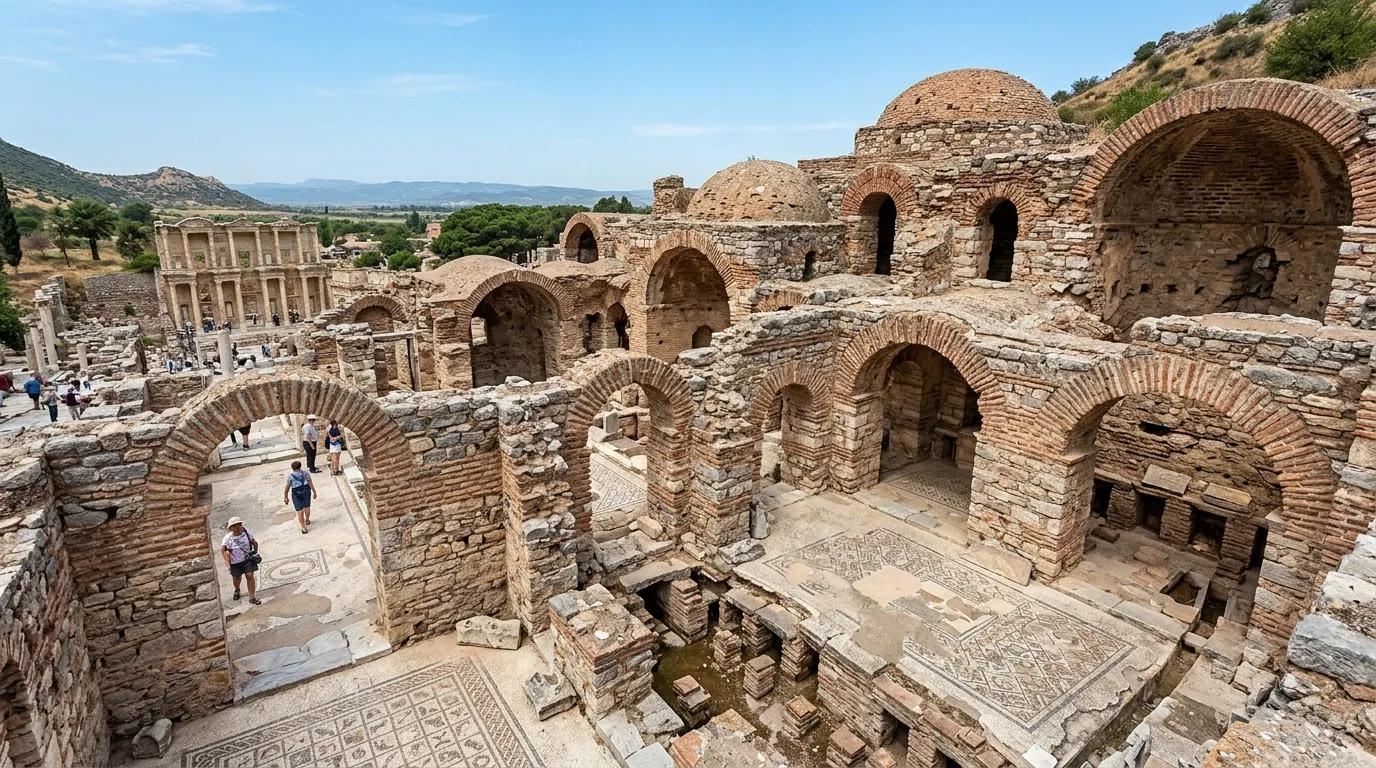
Beyond the grand marble ruins of Ephesus lies a hidden history found in the aromas of ancient kitchens and the rich legacy of a Mediterranean culinary melting pot. This "Food & Nourishment" series explores the city’s sophisticated gastronomic evolution, tracing the journey from humble Anatolian grains to decadent Roman and Byzantine feasts. By uncovering the specific ingredients that fueled empires, we reveal how Ephesus served as a global crossroads for flavors and trade. We invite you on a chronological journey through time to discover the scents and tastes that still linger in the Aegean breeze. Welcome to the ancient kitchen of the world, where history is served through the timeless art of nourishment.
The Archaic Period: The Rise of the Olive

As Ephesus grew around the Temple of Artemis, the landscape transformed into an evergreen sea of olive groves. In this era, the "Mediterranean Triad" grain, grapes, and olives; became the pillar of life. The Ephesians began perfecting extra-virgin olive oil, used not just for calories but as a base for perfumes. You would find locals snacking on salted almonds and dried figs, which were already becoming world-famous exports. Seafood from the then-active harbor, particularly mullet and sea bass, became a frequent protein source for the rising merchant class.
The Arzawa Kingdom: Anatolian Roots
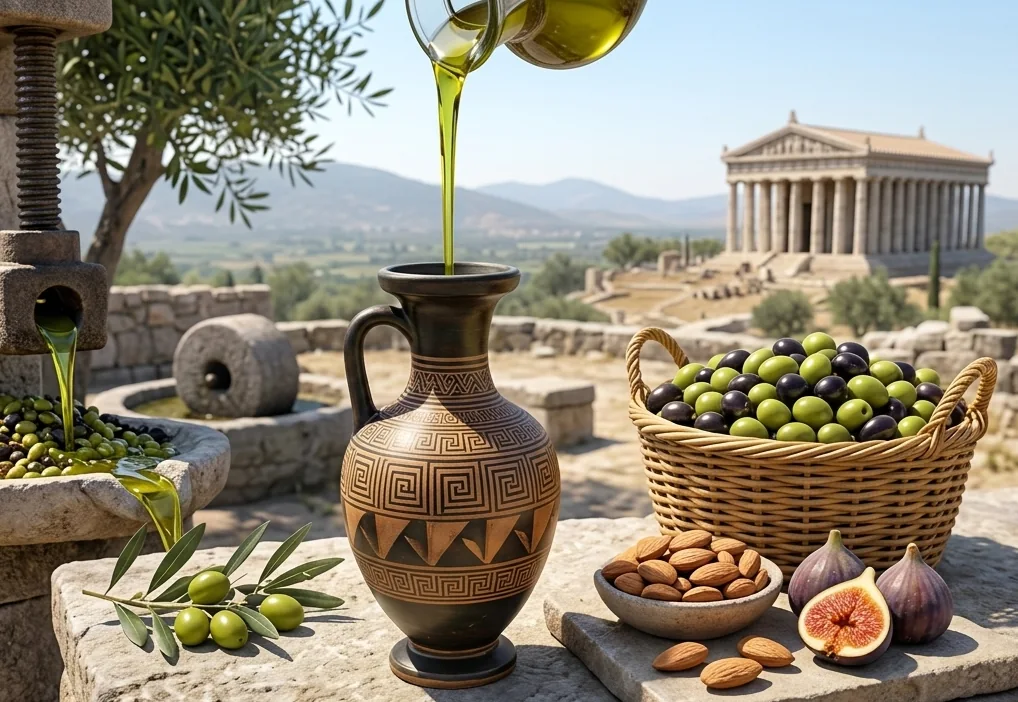
Before the Greeks arrived, the Luwian-speaking Arzawans laid the agricultural foundation of the region. Their diet was deeply tied to the land, focusing on barley and emmer wheat as staples. Archaeological traces suggest they were masters of the hearth, favoring stews seasoned with wild herbs like thyme and oregano. Meat was a luxury, often reserved for ritual sacrifices, where sheep and goats were roasted over open fires. The Arzawa period represents the "raw" flavor of Ephesus, where the diet was simple, seasonal, and dictated by the fertile soil of the Cayster Valley.
The Lydian Influence: The Gold & The Spice
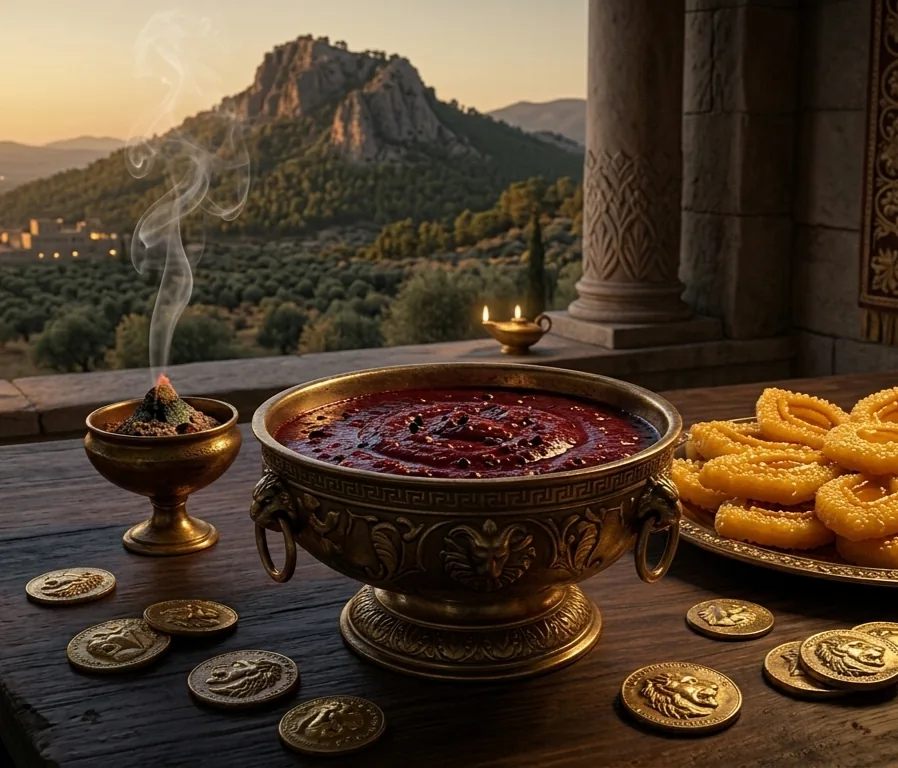
When the Lydians, the wealthiest neighbors of Ephesus, exerted their influence, the local palate became more "cosmopolitan." This period introduced a love for richer fats and imported spices. The Lydians were known for "Karyke," a complex, spicy sauce made with blood, herbs, and expensive oils that graced the tables of the elite. Honey-cakes became a sophisticated dessert, often flavored with sesame. This was the era where food transitioned from mere sustenance to a display of status, mirroring the "Midas touch" of Lydian wealth.
The Greek-Hellenistic Era: The Symposion Culture

Under the Greeks, eating became a theatrical and social event known as the Symposion. The diet centered on "Maza" (barley cakes) and a variety of legumes like chickpeas and lentils. Ephesus became a hub for refined viticulture, producing potent wines usually diluted with water and flavored with pine resin or honey. A unique highlight was the "Kykeon," a thick beverage made of barley gruel and goat cheese, often associated with mystery rites. Dining was now about balance—philosophical conversation paired with light, healthy Mediterranean ingredients.
The Roman Period: Garum & Grandeur
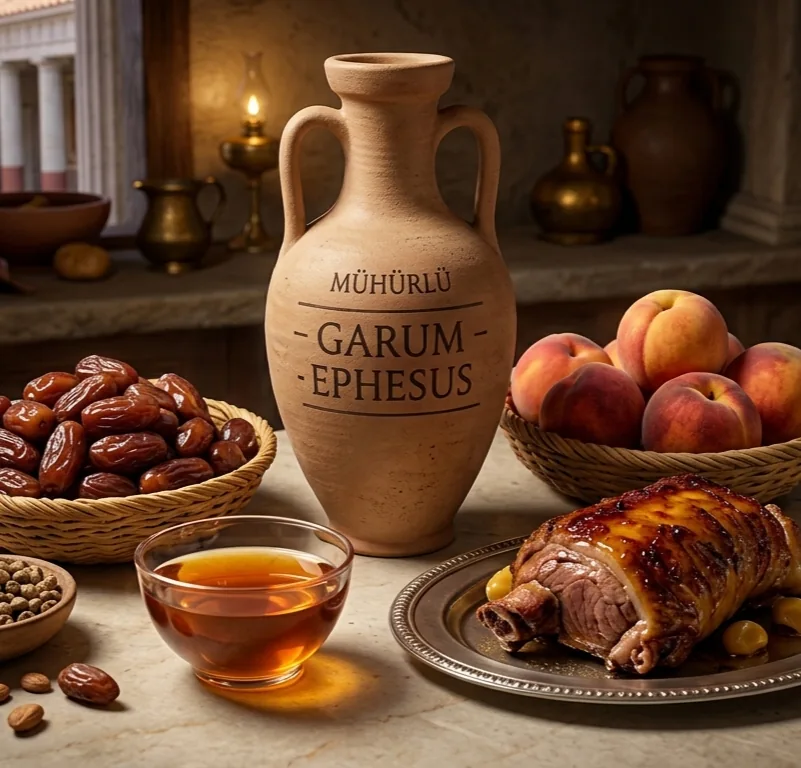
Roman Ephesus was a city of decadence and high-volume trade. The air would have been pungent with the scent of Garum, the fermented fish sauce that Romans added to almost every dish for a salty "umami" kick. The markets were flooded with exotic imports: dates from Egypt, pepper from India, and silphium from North Africa. Romans introduced sophisticated irrigation for lush orchards, leading to a surplus of cherries, apricots, and peaches. For the commoner, the "Thermopolium" (fast food stalls) offered lentil soup and sourdough bread, while the elite feasted on roasted game glazed with honey and wine.
The Byzantine Era: The Monastic Table
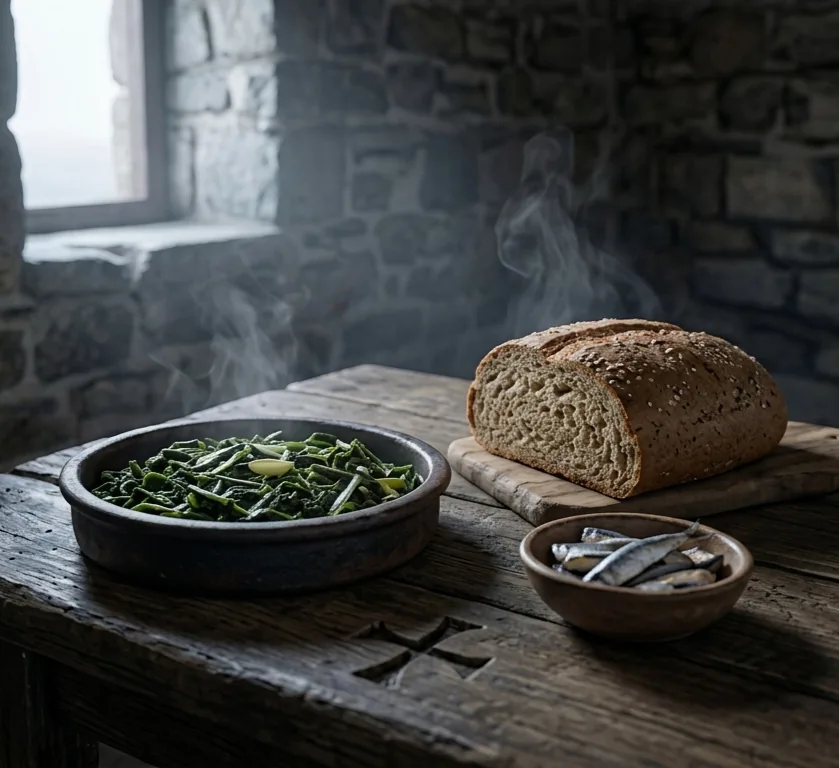
As Ephesus shifted toward a Christian center, the diet became more modest but remained deeply flavorful. The influence of monastic fasting popularized vegetable-heavy dishes and "Lenten" meals. Wine remained a staple, but it was often spiced with cinnamon and cloves. Sheep's milk cheese (the ancestor of Feta) and yogurt-like dairy products became more prominent. The coastal trade ensured that dried mackerel and salted sardines were the primary proteins, often paired with hearty wild greens (horta) sautéed in garlic and oil—a precursor to modern Aegean cuisine.