Temple of hadrian in ephesus is part of the archaeological landscape of ancient Ephesus. Explore its original context and surviving remains before planning a visit.
A Monument of Roman Architecture and Civic Identity in Ephesus Ancient City
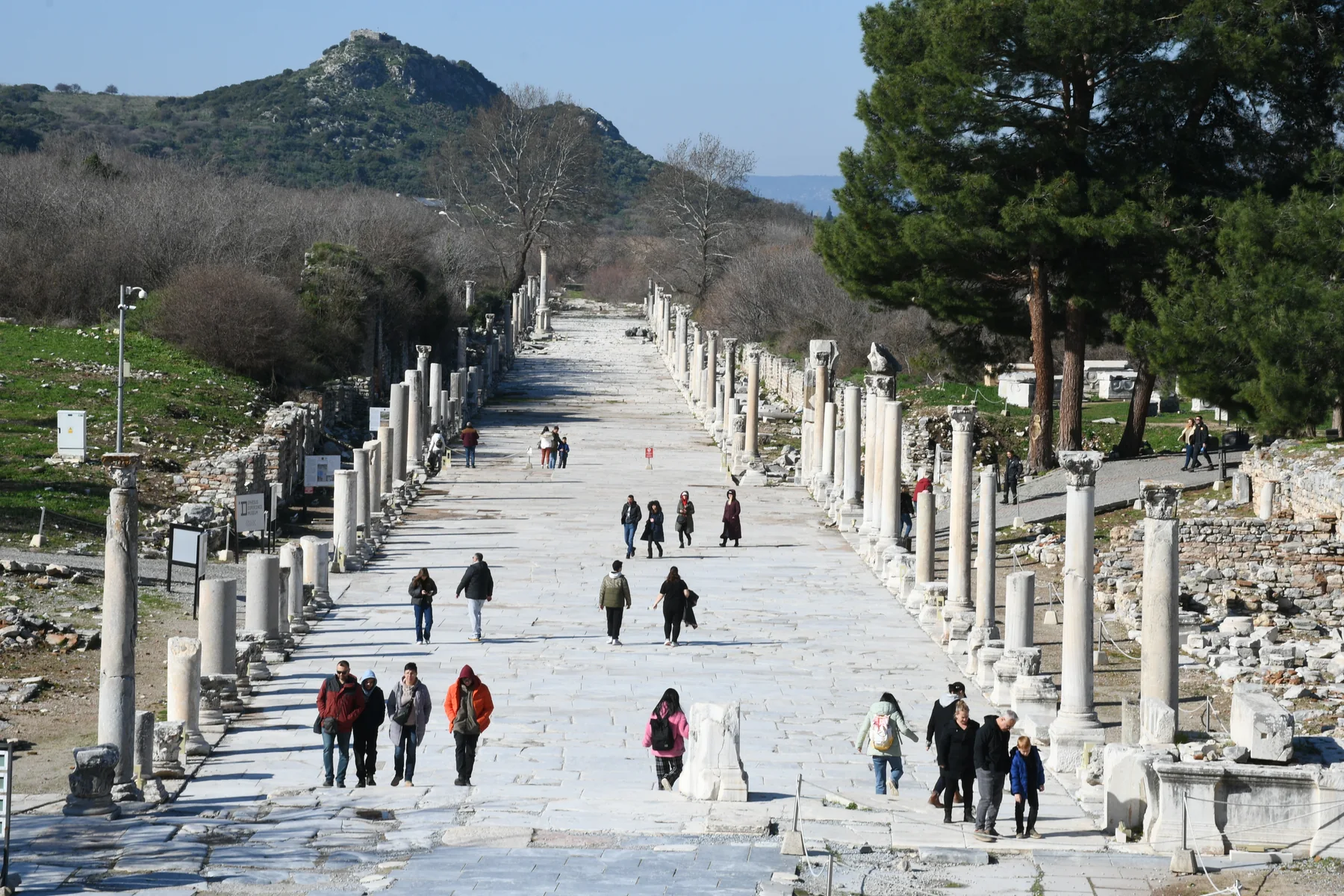
The Temple of Hadrian in Ephesus is one of the most recognizable monuments along Curetes Street in Ephesus Ancient City. Although traditionally associated with Emperor Hadrian, the structure is generally dated to the 2nd century AD and reflects the architectural and political character of the Roman period in Ephesus, Turkey. Its construction belongs to a time when Ephesus was flourishing as one of the principal cities of the Roman province of Asia, enriched by trade, urban development, and imperial patronage.
The temple is thought to have been built around AD 117–138, during or shortly after the reign of Hadrian, and its presence on one of the city’s most important streets demonstrates the close relationship between monumental architecture and public prestige. The façade, with its elegant Corinthian columns and distinctive central arch, illustrates the decorative refinement of Roman architecture in the eastern Mediterranean. Reliefs associated with the monument, including scenes linked to the mythical foundation of Ephesus, reveal how local identity and imperial culture could be expressed together within a single structure. In this way, the Temple of Hadrian in Ephesus stands at the intersection of religion, civic representation, and historical memory.
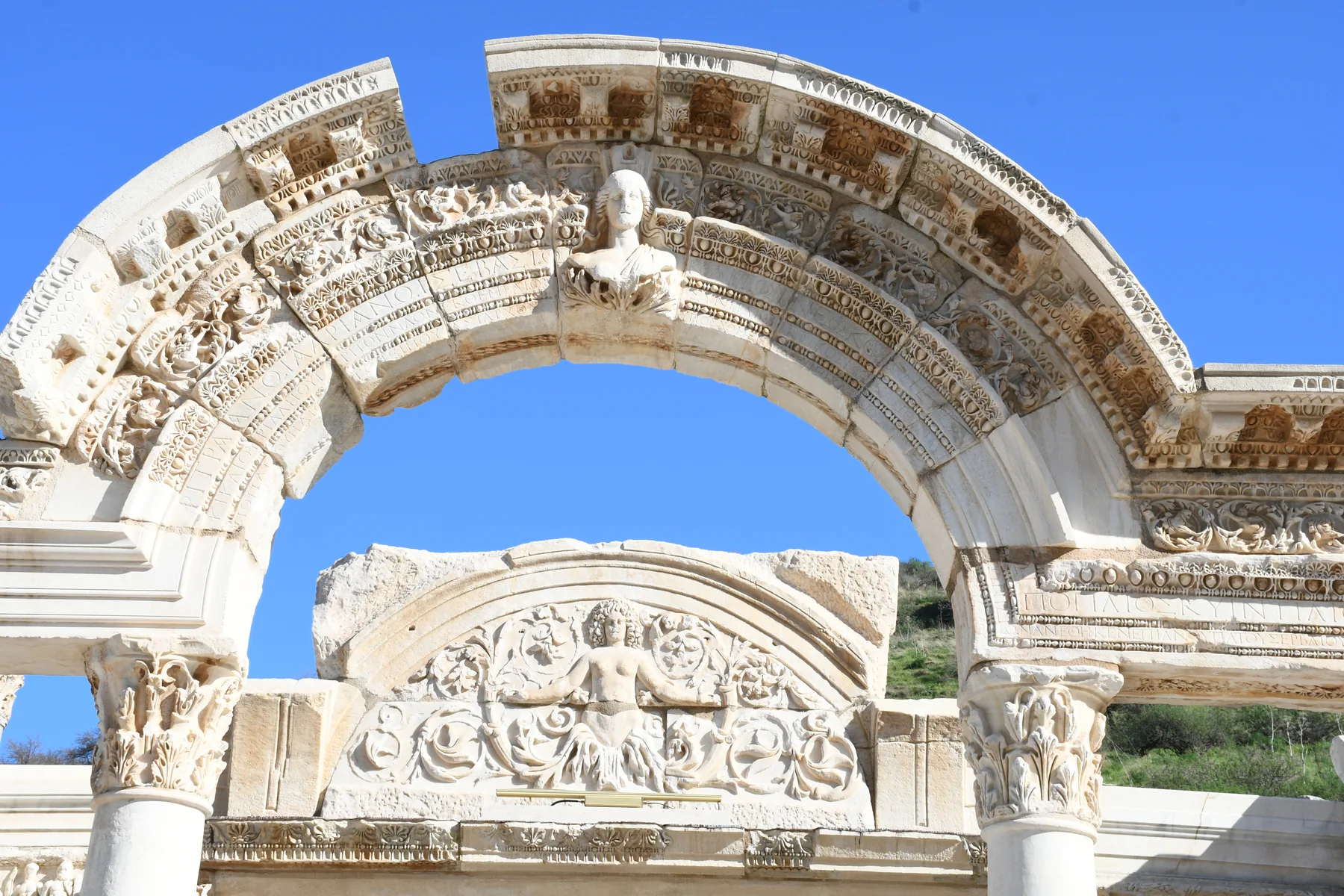
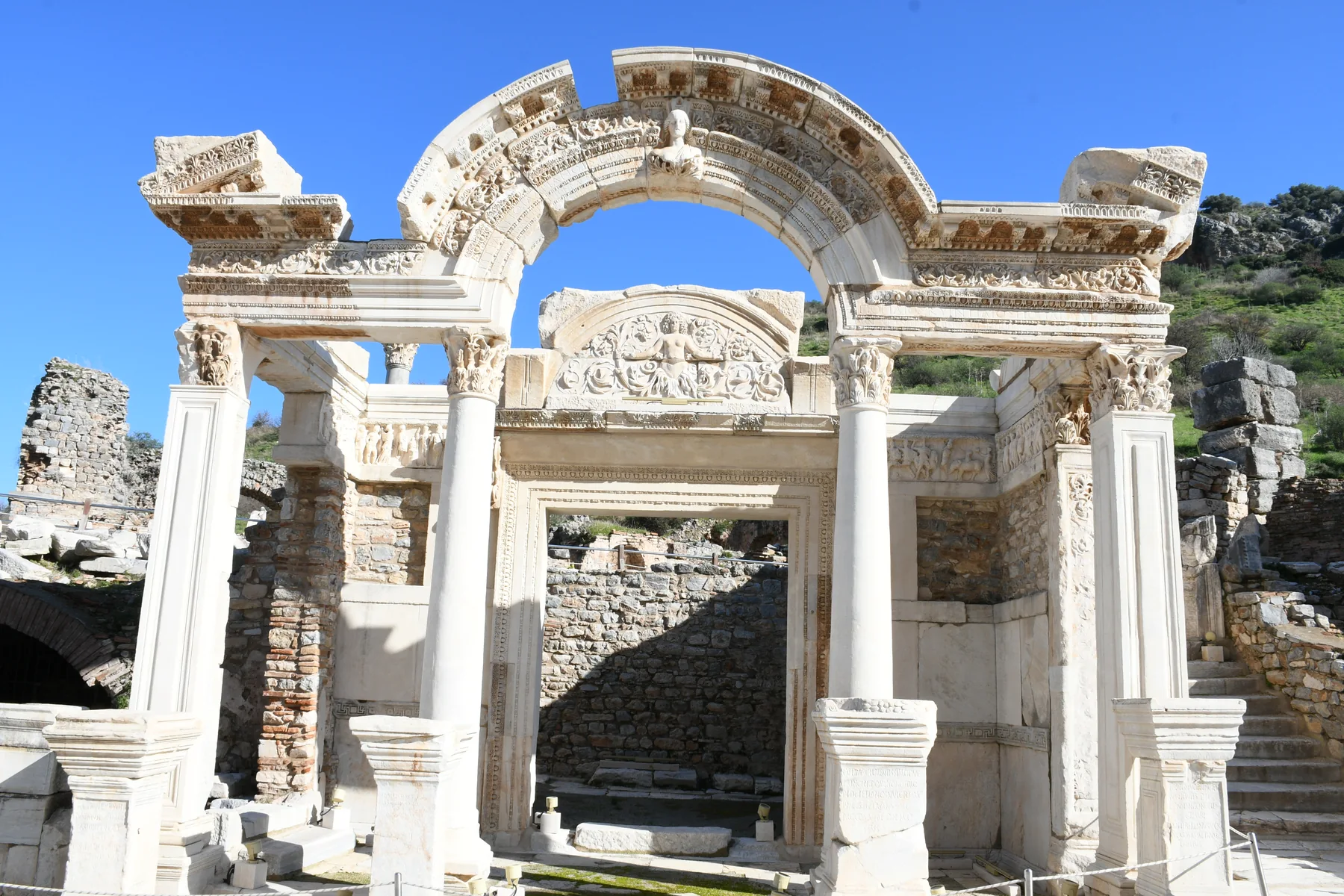
Over the centuries, the monument experienced damage, collapse, and later reconstruction, as is common with many structures in Ephesus Ancient City. Modern archaeological work has played a major role in uncovering, studying, and partially restoring the temple, allowing its architectural details to be understood more clearly. This long history—from Roman construction to archaeological preservation—makes the temple especially important for interpreting the development of Ephesus, Turkey and the changing meanings of its public monuments through time.
Ephesus Ancient City
Visiting tips
Check current admission, permitted access and opening hours with the official museum before your visit. Wear suitable footwear for uneven ancient surfaces, and confirm optional stops in your written tour plan.