
Pamukkale's white terraces and the ruins of Hierapolis are easy to remember as one sweeping landscape. The archaeology museum asks for a closer look. Set within a surviving Roman bath complex, it brings sculpture, small objects and architectural fragments into rooms that are themselves part of the ancient city. A visit here can turn a walk among monuments into a more personal encounter with the people and places of the wider Lycos Valley.
A museum inside an ancient bath
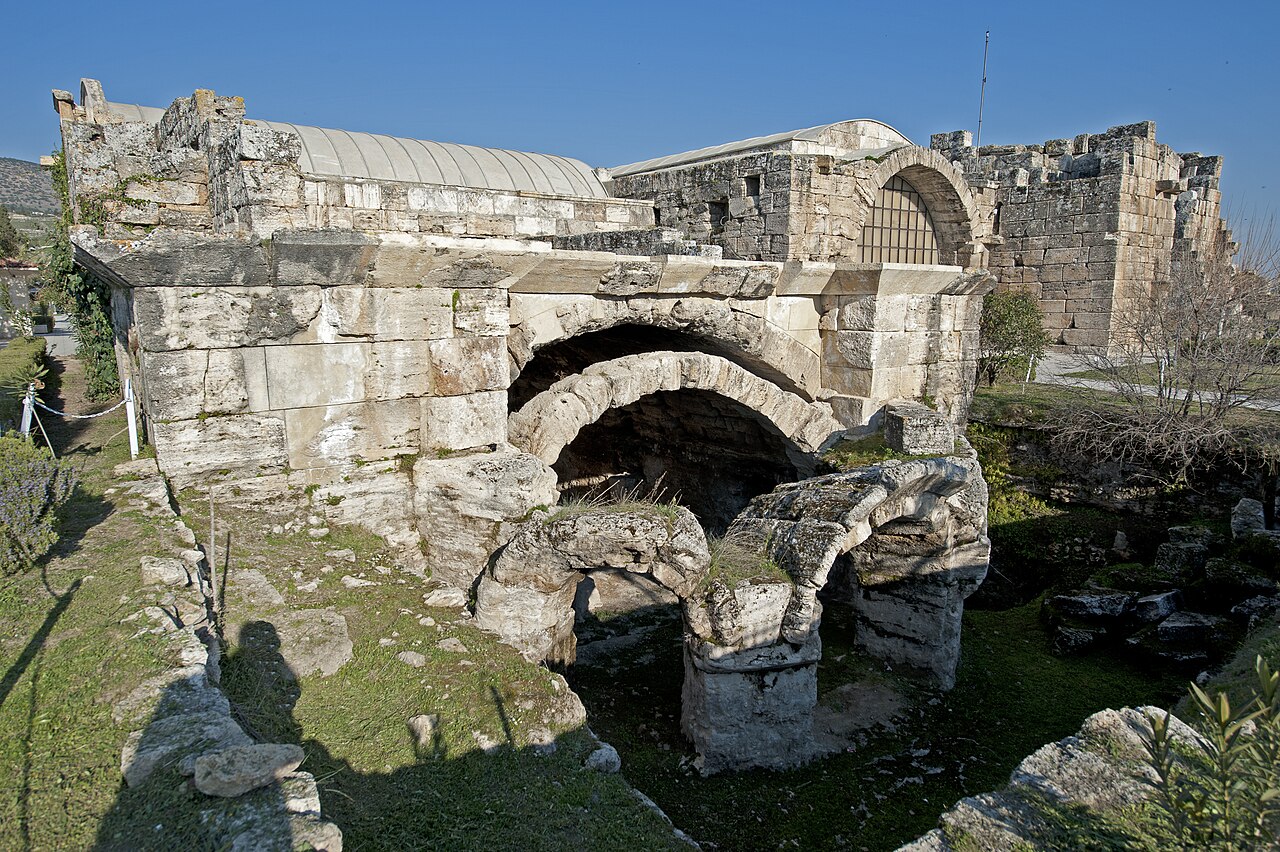
The official museum description places the collection in the Roman bath building at Hierapolis. The Denizli Provincial Directorate of Culture and Tourism says the restored complex has served as a museum since 1984. That is worth keeping in mind as you approach: the stone structure is not a neutral container built to look old. Its vaulted spaces belonged to the ancient urban setting before they became galleries.
From outside, pause to read the building's heavy masonry and arches before heading for the displays. The walls help establish scale. An object that seems isolated behind glass has a different presence when you remember that it is being shown within another archaeological survivor. Conservation and modern museum work have changed how the rooms function, so it is best to distinguish the ancient fabric from later presentation rather than imagine an untouched Roman interior.
Three galleries, several kinds of evidence
Türkiye Museums describes three principal halls in the bath complex: one for sarcophagi and statues, one for small finds, and one for finds associated with the theatre. This arrangement offers a useful way to visit. Give each hall a question rather than trying to absorb every label at once. In the sculpture gallery, ask what a monument communicated about status or memory. With small objects, think about work, exchange and everyday habits. In the theatre gallery, consider how architectural decoration shaped a public performance space.
The collection is not limited to material excavated within Hierapolis. Official descriptions also name Laodikeia and other places in the surrounding region; the provincial directorate refers to sites across the Lycos Valley and beyond. Read an object's provenance before assigning it to the city outside. The distinction matters because the museum tells a regional story as well as a local one. A find from another settlement can illuminate shared artistic tastes without becoming a Hierapolis find.
The small-finds hall rewards an unhurried visit. The official listing mentions ceramics from Beycesultan, lamps, glass, jewelry, coins and other objects. These categories bring human scale to a day otherwise dominated by vast streets and façades. A lamp or vessel cannot tell us everything about its owner, but it can prompt better questions about materials, trade and domestic life. Look at form and workmanship first, then check the label for date and origin.
What a sarcophagus can tell you
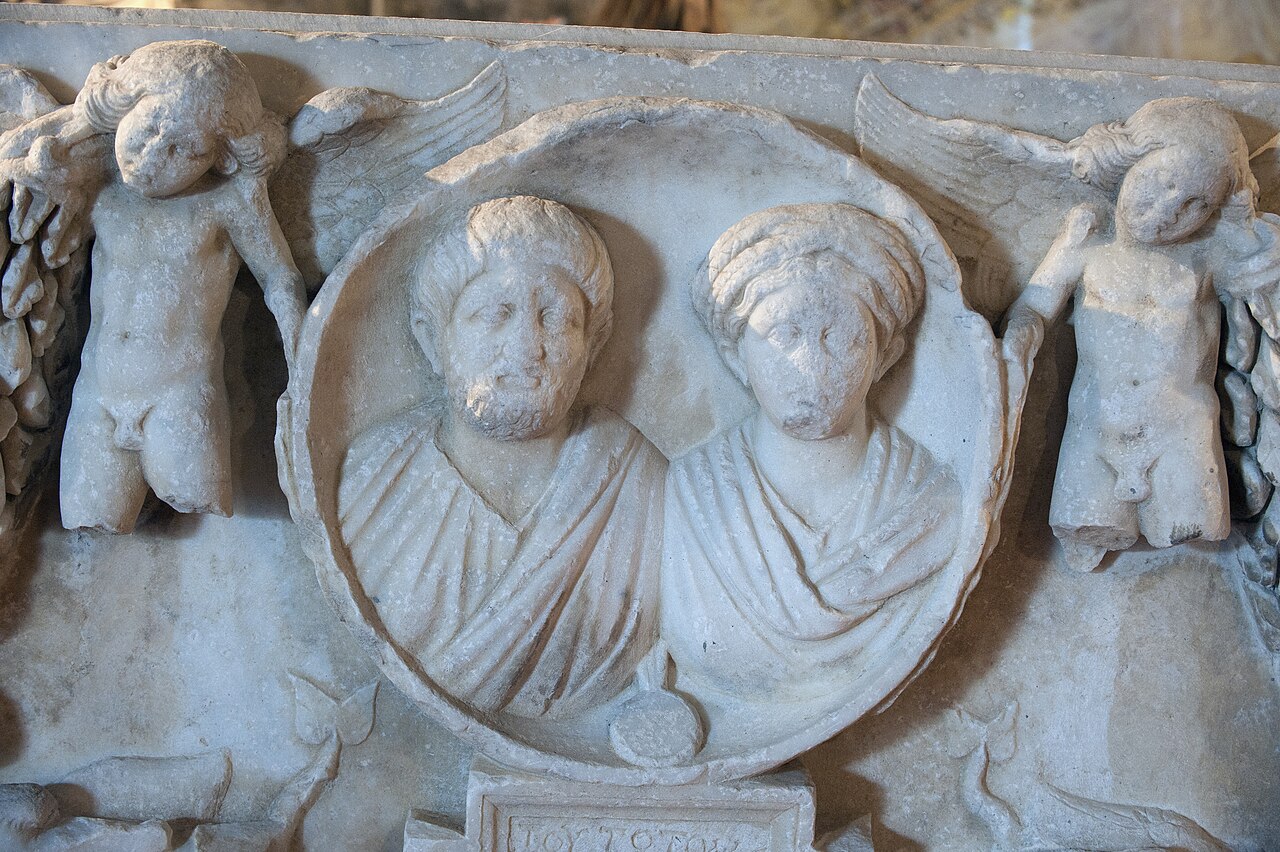
Among the museum's larger works are decorated sarcophagi. They are compelling visually, but they also show why careful reading matters. The garlanded example pictured here is identified by its photographer as a second-century work from Laodiceia, not Hierapolis. The paired portraits and carved figures invite a close look at commemoration and craftsmanship; they do not justify inventing a biography for the people represented. If the gallery label offers an identification, use that as your starting point.
Try stepping back after studying the detail. Consider the effort involved in obtaining stone, carving a complex surface and placing a commemorative monument in a community. Then compare its visual language with other pieces nearby. Similar motifs can cross city boundaries, while an inscription or excavation record may establish a much more specific context. The museum is strongest when you let both kinds of evidence play their proper roles.
Connect the theatre gallery to the city outside
The museum's theatre finds create a particularly satisfying link between display and landscape. Türkiye Museums describes reliefs associated with the theatre's stage building, including mythological subjects. Their original setting was architectural and public; a museum hall lets you inspect details that would be difficult to study from a distance at the monument. Notice how a figure or scene reads at close range, then imagine the change in effect when it formed part of a larger façade.
Afterwards, our guide to the Hierapolis theatre can help place those fragments in the broader performance setting. It is not a substitute for the museum labels, which should guide specific identifications. If your route continues through the archaeological site, also compare the bath's enclosed rooms with the open line of the Frontinus Gate and colonnaded street. One city could contain monumental entrances, gathering places and everyday objects, all with different stories to tell.
Make room for the museum in your day
It is tempting to leave the museum until the end of a packed Pamukkale itinerary. A better approach is to allow a deliberate stop while you still have attention for the galleries. Begin with the building, choose a few objects in each hall, and use their labels to trace connections to places you have seen or plan to see. You do not need to identify every sculpture to come away with a clearer understanding of the region.
Check the official museum listing before travelling for current access, opening arrangements and admission information; these may change. The ancient site includes uneven surfaces, so wear suitable shoes and follow on-site routes and barriers. Indoor gallery access and photography rules should be confirmed locally as well. This article does not assume a particular ticket covers the museum or that every room is always open.
Our private Pamukkale and Hierapolis tour provides a way to explore the area with a guide and local transport. A museum stop is not a guaranteed inclusion in the published route; ask for it in your written plan and confirm separate admission arrangements before booking. That small planning step makes it easier to give the collection the time it deserves.
Hierapolis Archaeology Museum is most revealing when treated as more than a rainy-day alternative to the terraces. Its Roman bath rooms, regional collections and theatre fragments help connect a spectacular outdoor site with the objects that made ancient lives tangible. Walk in curious about the city; leave with a wider map of the valley.
Sources and further reading
Explore Pamukkale with context.
Review the route and inclusions before requesting your own private itinerary.
EXPLORE THE PAMUKKALE TOUR