
Pamukkale's white terraces are the best-known mineral landscape in Denizli, but the nearby village of Karahayıt offers a strikingly different view of water and stone. Its Kırmızı Su, or Red Spring, leaves coloured deposits across a small formation. This is a separate place from the protected walking areas at Pamukkale and the ruins of Hierapolis. A short look at the spring can sharpen your understanding of the wider region without turning two distinct sites into one attraction.
Find Karahayıt on the Denizli route
GoTürkiye's Denizli route suggestions place Karahayıt's red-water travertines alongside, but separately from, Pamukkale and Hierapolis. That distinction is useful when planning a day. The archaeological city, its museum, and the white terraces already reward unhurried attention. Karahayıt is another stop with its own setting, access arrangements, and local life. It should not be assumed to be included in a standard Pamukkale ticket or a published tour itinerary.
Look at a current map before travelling. The name Karahayıt can refer to a neighbourhood, thermal hotels, spa facilities, and the specific Red Spring. A search result for the village is not necessarily the public viewpoint you intend to visit. Ask locally about the permitted viewing area and any current conditions. The goal is to see the formation in its actual setting rather than treating the entire district as a single photographic stop.
Why the spring looks different
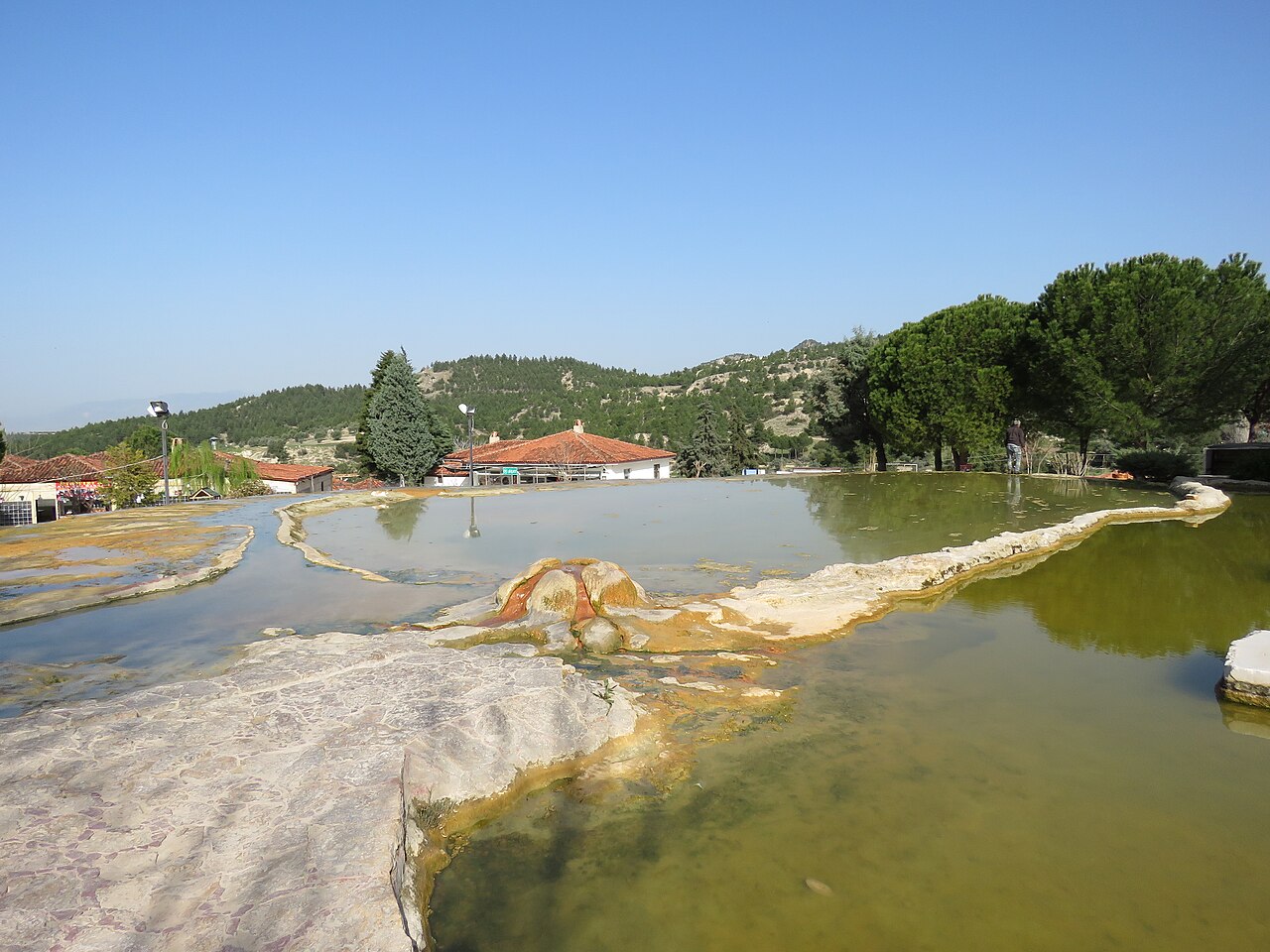
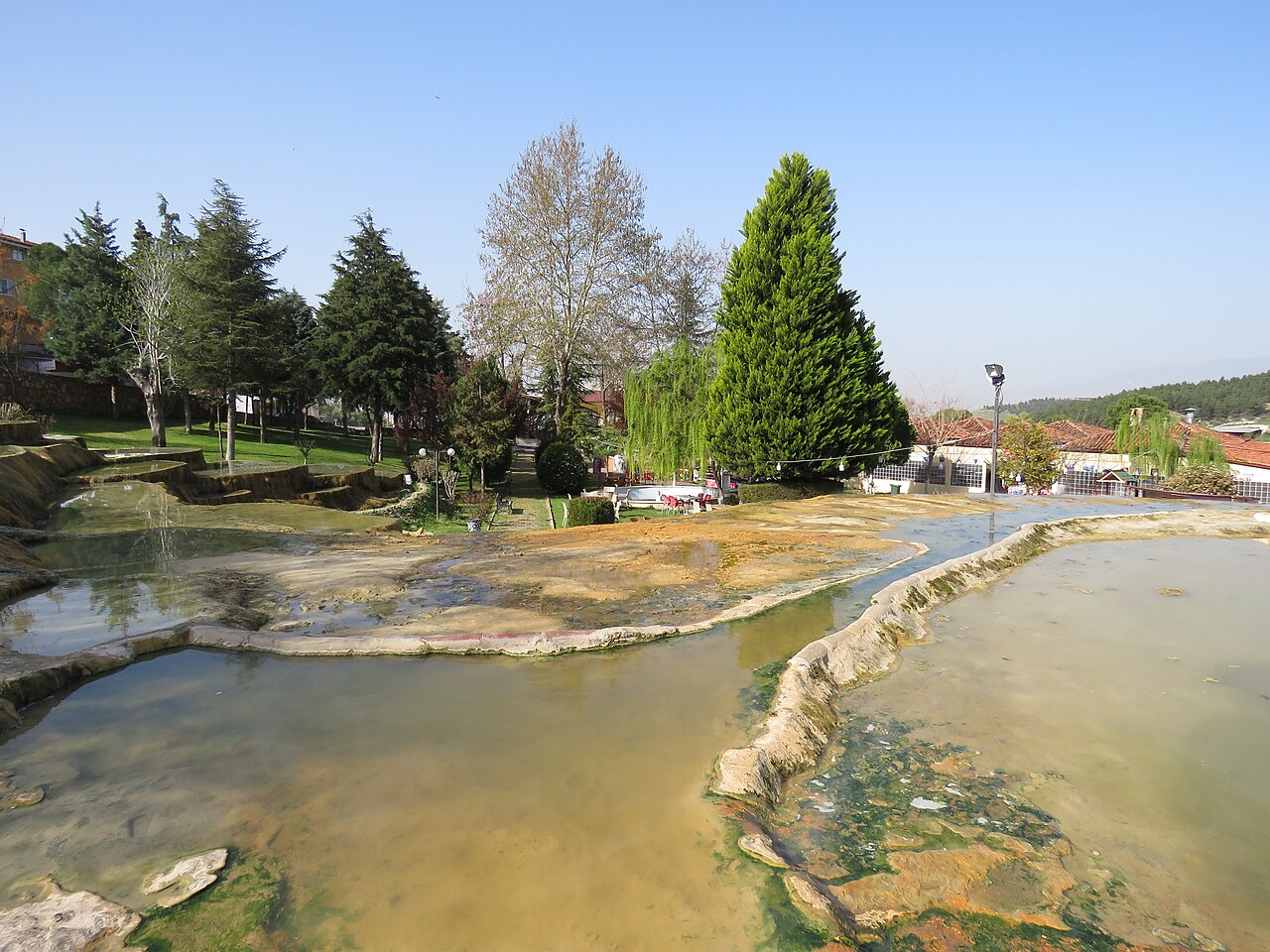
GoTürkiye describes Karahayıt's spring as a contrast to the familiar white terraces. Mineral content and oxidation produce red, green, and brown tones in the deposits around the water. The colours vary across surfaces and in different light. Photographs can exaggerate the contrast, so give yourself time to examine the textures directly. Notice where water has flowed, where it has left a crust, and where older deposits appear dry.
The comparison with Pamukkale is helpful, but it should remain a comparison. UNESCO describes Pamukkale's remarkable white landscape as the result of calcite-rich water emerging on a high cliff and forming terraced basins. Its World Heritage inscription also includes the ancient city of Hierapolis. Karahayıt's Red Spring belongs to the same broad Denizli travel region, yet it is not the same spring, the same formation, or a substitute for visiting the inscribed property. Our Pamukkale travertines article explains the white terrace landscape and why managed access matters there.
Try reading the spring as an active process rather than a static sculpture. Flowing mineral water may change a surface slowly, while management and weather affect what visitors see on a particular day. A historic photograph records one moment, not a promise of identical colours or water flow today. The two photographs here show the actual Karahayıt spring in March 2024, from different angles. They are not pictures of the Hierapolis archaeological site.
Make a careful, enjoyable stop
Start at a designated public viewing area. Keep to marked paths and avoid stepping on mineral crusts or climbing a formation for a photograph. Even a small spring deserves the same care you would give an archaeological surface: repeated footsteps can damage what makes it worth seeing. Watch for wet or slippery ground, especially where water crosses a walkway. Carry water and sun protection, and take a moment to look beyond the closest pool toward the village setting.
Thermal facilities in Karahayıt are separate businesses. Their admission, bathing rules, services, and opening times may change. This article describes a landscape, not a spa treatment. Do not assume that seeing the public spring gives access to a pool or that a photograph of coloured deposits documents a medical benefit. GoTürkiye promotes the area's thermal character, but personal health decisions require qualified advice rather than a travel article. Enjoy the colours, geology, and local context without making a treatment claim.
If your day begins at Hierapolis, allow enough time for the city before adding a second destination. The Hierapolis theatre guide and our travel guide can help you decide which part of the archaeological site most interests you. Many visitors try to fit every viewpoint, pool, museum room, and ruin into a short window. A more realistic plan leaves room to read signs, move safely on uneven ground, and adjust to the conditions you encounter.
Place it within a private journey
Our published private Pamukkale and Hierapolis tour describes its own route and inclusions. Karahayıt is not presented there as a guaranteed stop. If you want to visit the Red Spring as well, mention it when requesting an itinerary. The team can discuss whether a separate stop fits your departure point, available time, and the current access conditions, then confirm any change in writing. A plan built around your priorities is more useful than assuming that every place near Pamukkale is automatically on the route.
After visiting, compare what stayed with you: the broad white cliff at Pamukkale, the streets and buildings of Hierapolis, or the smaller coloured formation at Karahayıt. They show different relationships between water, place, and people. Keeping those differences clear makes the region more interesting, and it makes your photographs more truthful. The Red Spring is a good reminder that an area's best-known landmark is rarely its only story.
Sources and further reading
- GoTürkiye: Denizli routes, including Karahayıt's red-water travertines
- GoTürkiye: Karahayıt's Red Spring and its mineral colours
- UNESCO World Heritage Centre: Hierapolis-Pamukkale
- Turkish Ministry of Culture and Tourism: Hierapolis archaeological site
Explore Pamukkale / Karahayıt with context.
Review the route and inclusions before requesting your own private itinerary.
EXPLORE THE PAMUKKALE TOUR