
Pamukkale is often reduced to one photograph: white steps beneath a blue sky. The travertines reward a slower look. Their pale surfaces are the visible result of mineral-rich spring water moving down a hillside, while the ancient city of Hierapolis occupies the ground above. Together they form the UNESCO World Heritage property Hierapolis-Pamukkale. Understanding that connection changes a visit from a search for the brightest pool into an encounter with a living landscape and a long human history.
A hillside shaped by water
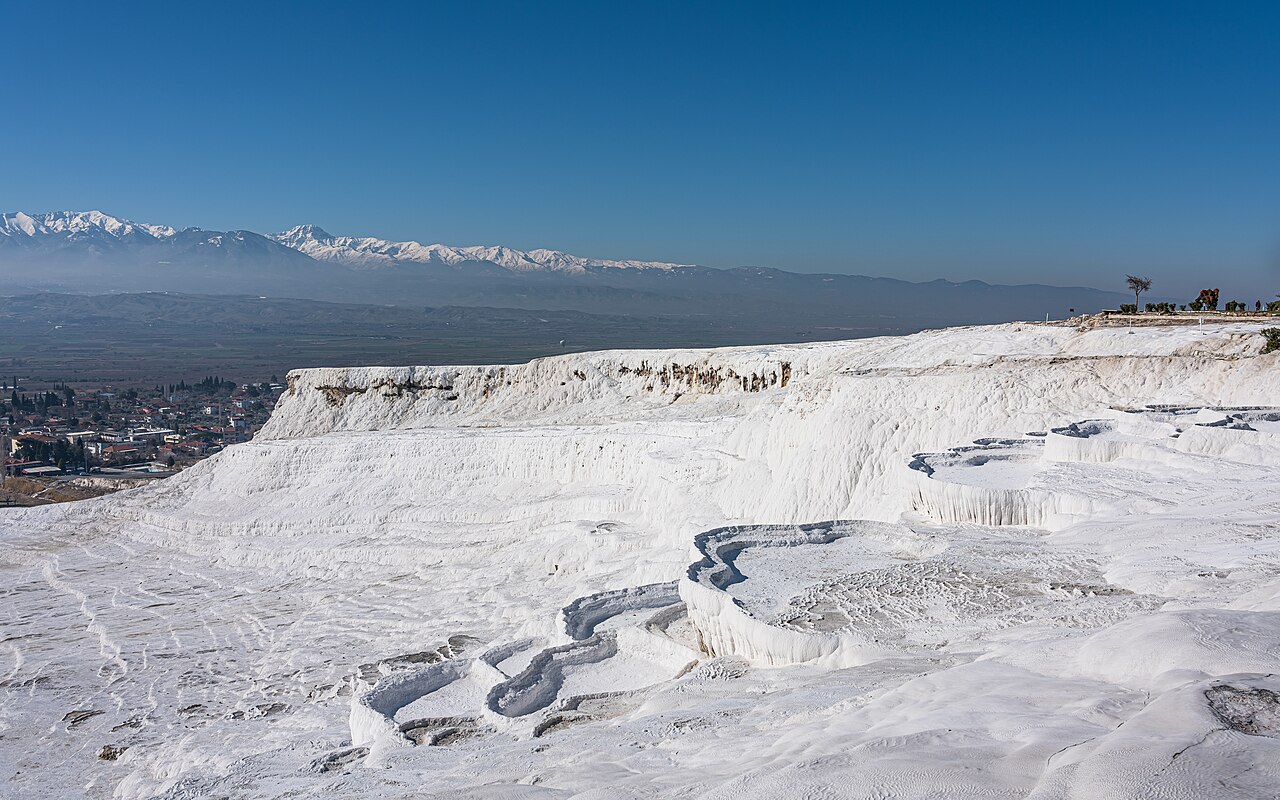
UNESCO describes springs emerging along a cliff almost 200 metres above the plain. Their calcite-laden water has built terraces, basins and forms that can resemble frozen waterfalls. Travertine is a deposit of calcium carbonate: as spring water reaches the surface and conditions change, some dissolved mineral is left behind. The resulting layers build over time rather than appearing as a single sheet of white stone. Water continues to matter to the landscape, even when a particular basin looks dry on the day you visit.
From a distance, notice the overall shape of the slope. Then look at the smaller rims that divide one basin from another. The two scales tell the same story: water follows gravity, meets an edge, and leaves a trace. There is no need to step onto a fragile rim to see it. A marked viewpoint can reveal the pattern more clearly than a hurried close-up.
Why the white is not snow
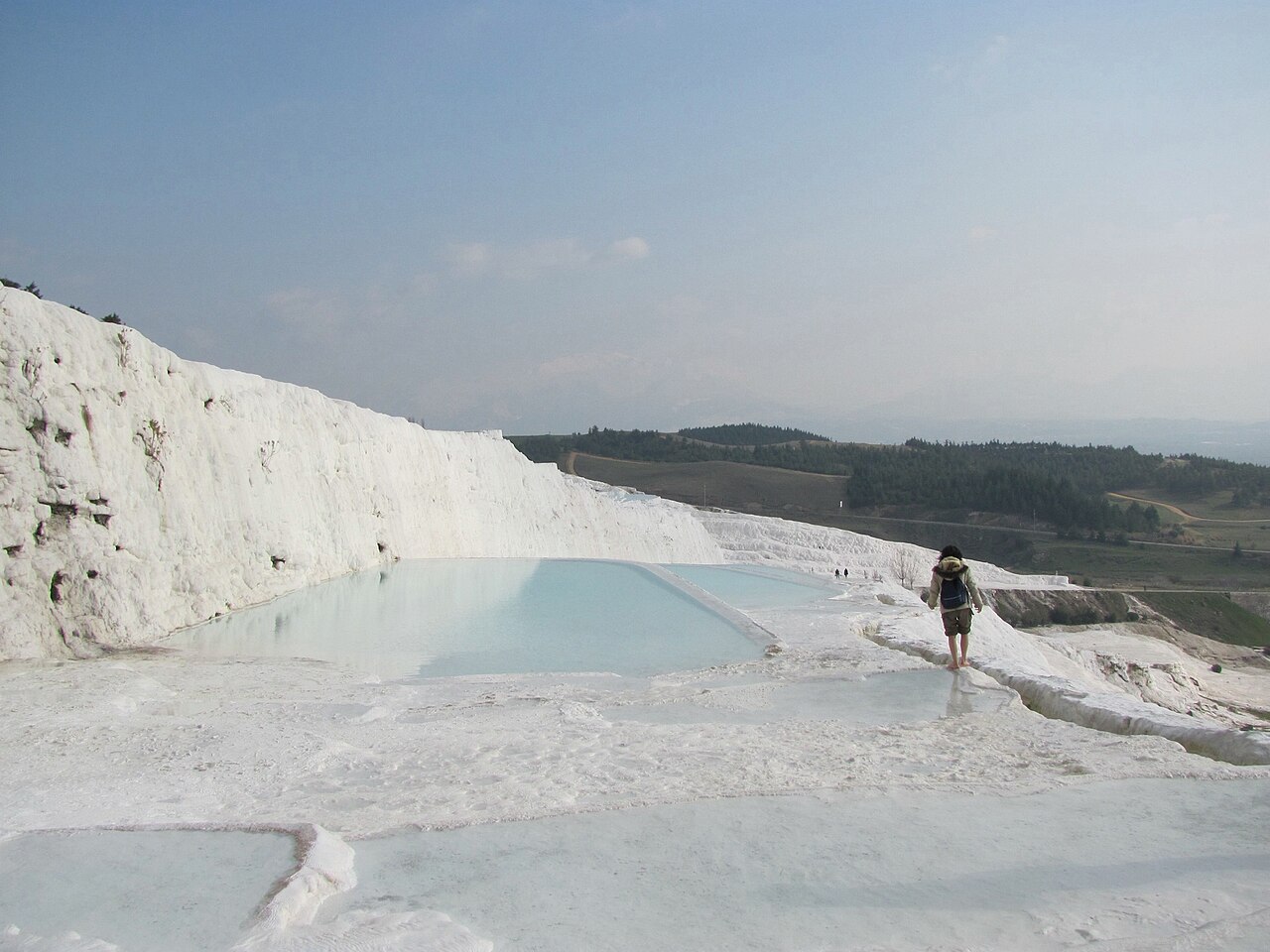
“Cotton Palace” is the usual translation of Pamukkale's Turkish name, and it makes sense when the terraces are seen from the valley. But their colour comes from mineral deposition, not cotton or snow. Light, water and shadow change the appearance throughout the day. A wet surface can look glossy; a dry one may seem matte. Photographs can make every basin appear equally blue, although the view from a particular path depends on weather, water management and the angle of the light.
It is tempting to treat a patch without visible water as a failed attraction. That overlooks the fact that this is a protected landscape rather than a permanent swimming set. UNESCO's conservation account describes water distribution and visitor access as matters of management. What is visible and where visitors may walk can change. Read current signs and follow the route open during your visit. The place is worth seeing as a geological process, even when it does not match a promotional image.
Look above the terraces
The travertines are only one part of the World Heritage property. Hierapolis grew around the thermal springs, with streets, baths, religious buildings and a theatre on the plateau. UNESCO traces the spa's establishment to the Attalid rulers of Pergamon in the late second century BC. Later Roman buildings show how people organised a city around the same water that shaped the hillside. A visit that ends at the white slope misses this relationship between nature and settlement.
As you move toward the archaeological area, ask how the springs might have influenced daily life, bathing and the city's reputation. Surviving walls cannot answer every question, but they make the setting legible. Our guide to the Hierapolis theatre focuses on one monumental stop, while the northern necropolis guide follows another part of the ancient city. Both can help you decide what deserves time after the terraces.
Read a terrace rather than just photograph it
Choose a permitted viewpoint and trace the edge of one basin. Where does the rim rise? Where would water pass to the next level? Notice whether the surface is smooth, ribbed or irregular. Those details are easier to observe when you stop moving for a moment. The broad white backdrop is spectacular, but its small variations make it more interesting than a flat, uniformly coloured wall.
Give other visitors room, especially at narrow sections of the route. The most useful photograph may be a wider frame that includes the line of basins and the plateau, rather than a close-up that hides the setting. If a basin is not accessible, do not cross a barrier for a clearer picture. Protection is part of the reason this unusually delicate place can remain open to visitors at all.
Plan a visit around the whole site
Allow enough time for both the terraces and Hierapolis. The archaeological landscape is broad, and the most rewarding route is not necessarily the shortest one between two famous photo spots. Start by checking the current entrances and access information on the official Turkish Museums page. Hours, ticket arrangements and individual areas can change, so use the official page and on-site notices for the day of travel instead of an old blog timetable.
Bring drinking water and sun protection. The light reflected from pale stone can feel strong, and parts of the wider ruins offer little shade. Surfaces may be wet or slippery, so move carefully and respect any footwear instructions posted at the route. Do not assume every terrace or pool is open for entry. If mobility, steps or a long walk are concerns, check the currently available access route with the site before setting out.
Connect the landscape to your itinerary
A practical visit can begin with a wide view, continue along permitted sections of the travertines, and then move into Hierapolis. The sequence helps the landscape make sense: first see what the springs have built, then see how people used the plateau beside them. You can reverse the order if the current entrance or conditions make that easier. There is no single required route, and access arrangements should guide the plan.
For an itinerary that combines the natural formation with the ancient city, see our Pamukkale and Hierapolis tour. Confirm the actual stops, admission arrangements and pace with the operator before booking. Whether you travel independently or with a guide, keep the central idea in view: Pamukkale is a changing water-shaped landscape beside an archaeological city, not a fixed photograph. The best visit makes time for both.
Sources and further reading
Explore Pamukkale with context.
Review the route and inclusions before requesting your own private itinerary.
EXPLORE THE PAMUKKALE TOUR