
On a walk through Ephesus, the Library of Celsus and the Temple of Hadrian can draw attention away from the remains of an important public bath. The Baths of Varius, commonly called the Scholastica Baths, occupied a place near Curetes Street. Their surviving rooms make a useful stop for thinking about the practical side of urban life: water, circulation, repair and the changing use of a large building. This is a different complex from the Harbour Baths elsewhere in the city.
Find the baths near Curetes Street
The Ephesus World Heritage nomination identifies the Baths of Varius near the street behind the Temple of Hadrian. It also records a seated statue of Scholastica, a wealthy Christian woman associated with a fourth-century restoration of the complex. The two names therefore point to different layers of the building's story: Varius is the name attached to the bath complex, while Scholastica recalls later work. Do not assume that every standing wall or column belongs to the same construction phase.
Start with the Curetes Street guide and a current site plan to locate the bath relative to the Temple of Hadrian and the nearby latrine. The relationship matters. Public bathing was part of the city's social and physical infrastructure, not an isolated attraction. Looking at the approaches to the complex helps explain how visitors moved between the street, neighbouring buildings and the bath's interior spaces.
Stand where the public route permits and look across the surviving walls before focusing on a single detail. The remains are incomplete, so an open rectangle of stone should not automatically be labelled a swimming pool or a changing room. Compare the plan, any site interpretation and the visible fabric. A thoughtful stop can reveal more than a hurried photograph taken without context.
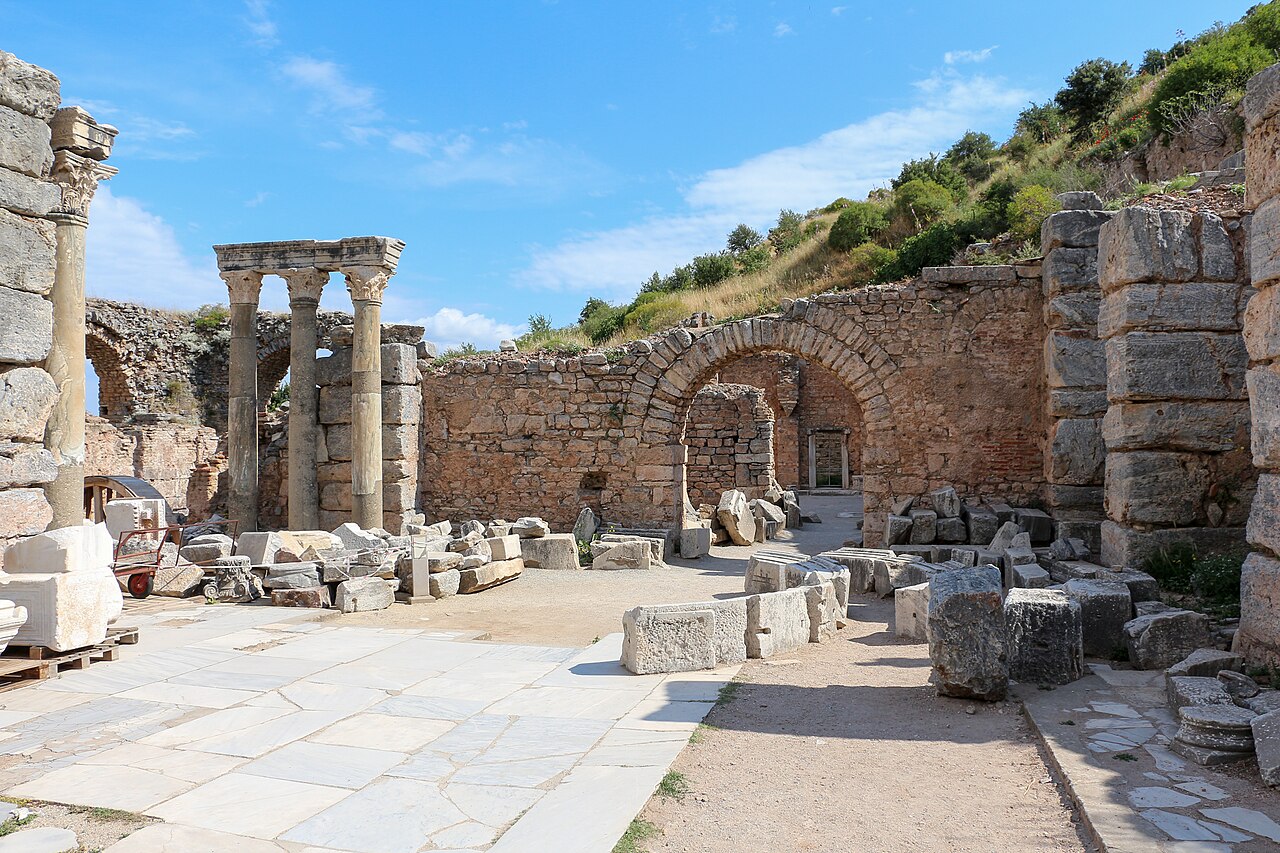
Read a building that changed over time
The nomination dossier describes the complex as one of the larger baths of Ephesus and specifically mentions Scholastica's restoration. That evidence is more useful than treating the visible ruins as a single snapshot of Roman life. A building in a long-lived city could be repaired, adapted and reinterpreted. The later restoration shows continued investment in public space, even as the social and religious landscape of Ephesus changed.
Look for changes in masonry, the relationship between walls and openings, and the way fragments have been presented. Such observations can prompt questions, but they do not by themselves date a wall or prove its original function. Archaeological interpretation depends on excavation records and comparison with other buildings. When a sign or guide offers a specific identification, consider what evidence supports it rather than filling every gap with an imagined scene.
The name Scholastica can be especially memorable, yet a single benefactor does not explain the entire monument. It refers to a documented episode in a much longer history. The UNESCO nomination is a helpful starting point for that distinction; it should not be read as a complete room-by-room visitor guide. The preserved fabric, interpreted cautiously, makes the continuing use of the bath complex tangible.
Connect bathing to the life of Ephesus
Baths required a dependable water supply, maintenance and places for people to gather. At Ephesus, fountains, streets and baths belonged to the same inhabited city. For a wider look at that urban setting, compare the public fountains article with the bath remains. A fountain made water visible in the street; a bathing complex used water within a larger sequence of rooms. Neither should be reduced to decoration alone.
The nearby latrine offers another reminder that ancient cities needed systems for daily life. Its presence does not mean that every surviving channel at the baths can be identified from the visitor path. It does, however, encourage a practical question: how were water, access and sanitation organised in this crowded part of Ephesus? A map helps you see the buildings as neighbours rather than separate photographs in a travel album.
The Harbour Baths article provides a useful comparison. That complex belonged to a different part of the city near the former harbour. Looking at both places makes the scale of public bathing in Ephesus clearer without suggesting that they had identical histories or that all of their rooms can be reconstructed today. Their locations alone tell different stories about movement through the ancient city.
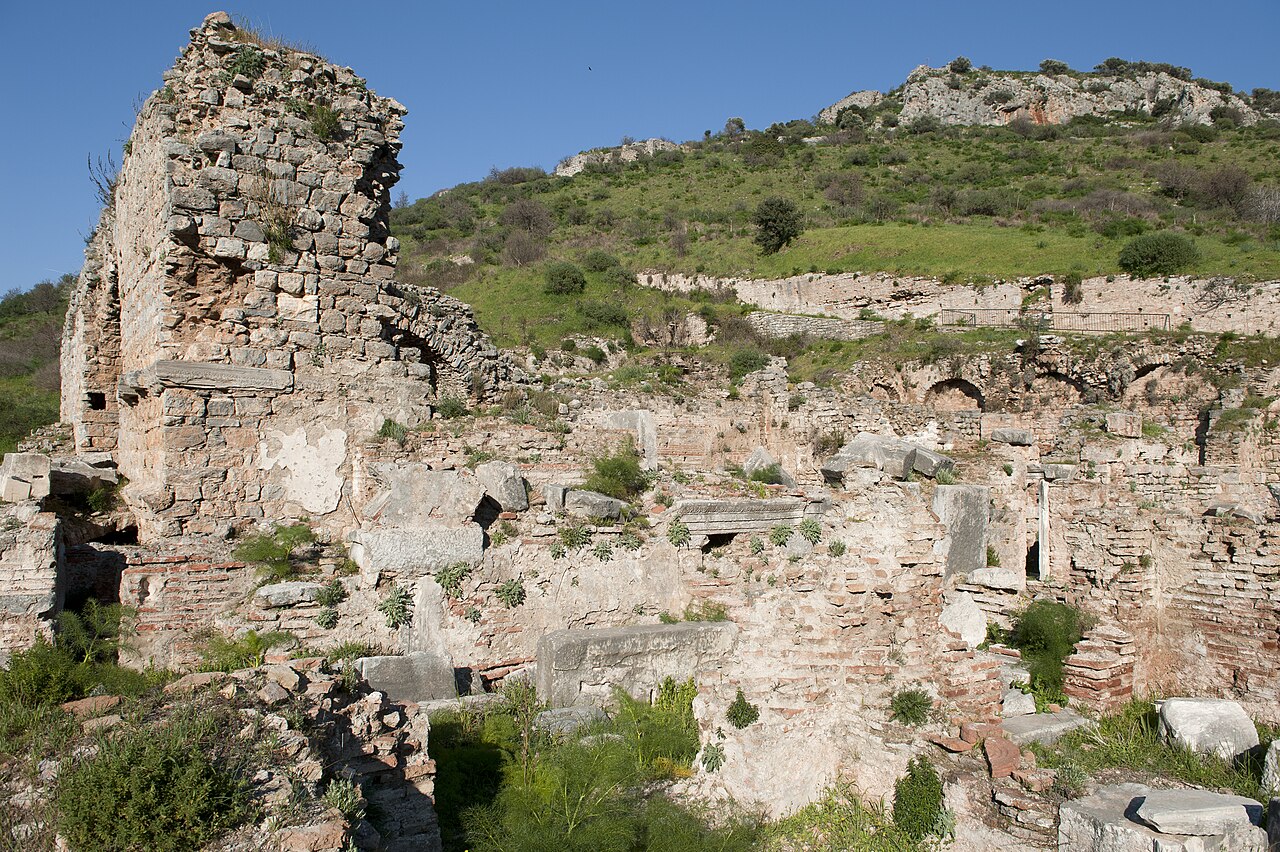
Make a practical stop during your visit
Give the bath complex a few minutes rather than treating it as a shortcut between more famous landmarks. Find it on the site map, look at the building from the permitted path and compare the broad arrangement with the details you can actually see. Uneven ground and exposed sun make comfortable shoes, water and sun protection sensible. Follow barriers and conservation signs; a compelling camera angle is never a reason to enter a closed area.
Before travelling, consult the official Ephesus archaeological site page for current visitor information. Access arrangements, opening hours and admission conditions may change. This article does not provide a ticket price or promise access to every part of the baths. If the complex is a priority, mention it when requesting a private Ephesus tour so the route can be discussed around the conditions on your visit date.
End by returning to Curetes Street and looking back at the bath's position in the urban fabric. The visible remains are only part of the story. The name Varius, the restoration associated with Scholastica, the neighbouring buildings and the larger water system together show why a public bath was more than a room for washing. It was a place maintained across generations in a city that continued to change.
Sources and further reading
Explore Ephesus / Curetes Street with context.
Review the route and inclusions before requesting your own private itinerary.
EXPLORE THE PRIVATE EPHESUS TOUR