
Pamukkale’s white terraces usually lead the conversation, but the ancient city above them contains a place where geology and belief met in a more unsettling way. The Ploutonion of Hierapolis was a sanctuary associated with the underworld. A natural fissure released gases near a sacred cave, and ancient writers described the site with a mixture of observation, ritual and wonder. Today the excavated remains invite a different kind of visit: look at the relationship between the stone structures, the fault beneath them and the stories people attached to the landscape.
Where the ancient city met a fissure
Hierapolis grew beside the thermal springs that also formed Pamukkale’s travertines. UNESCO describes the Temple of Apollo as standing on a geological fault from which harmful vapours escaped. The Ploutonion belongs to this same central sanctuary landscape. Water and gas were not decorative background: they helped shape where buildings stood and how people interpreted the place. From a safe public path, try to read the archaeological complex as part of the ground rather than as a freestanding ruin.
The Greek name Ploutonion refers to Pluto, ruler of the underworld; the Latin form is often written Plutonium. Both names appear in writing about Hierapolis. “Gate to the underworld” is a description of an ancient belief, not a literal claim about what lies below the stones. Keeping that distinction clear makes the site more compelling. A natural phenomenon was visible to ancient visitors, while a religious community gave it meaning through architecture and ritual.
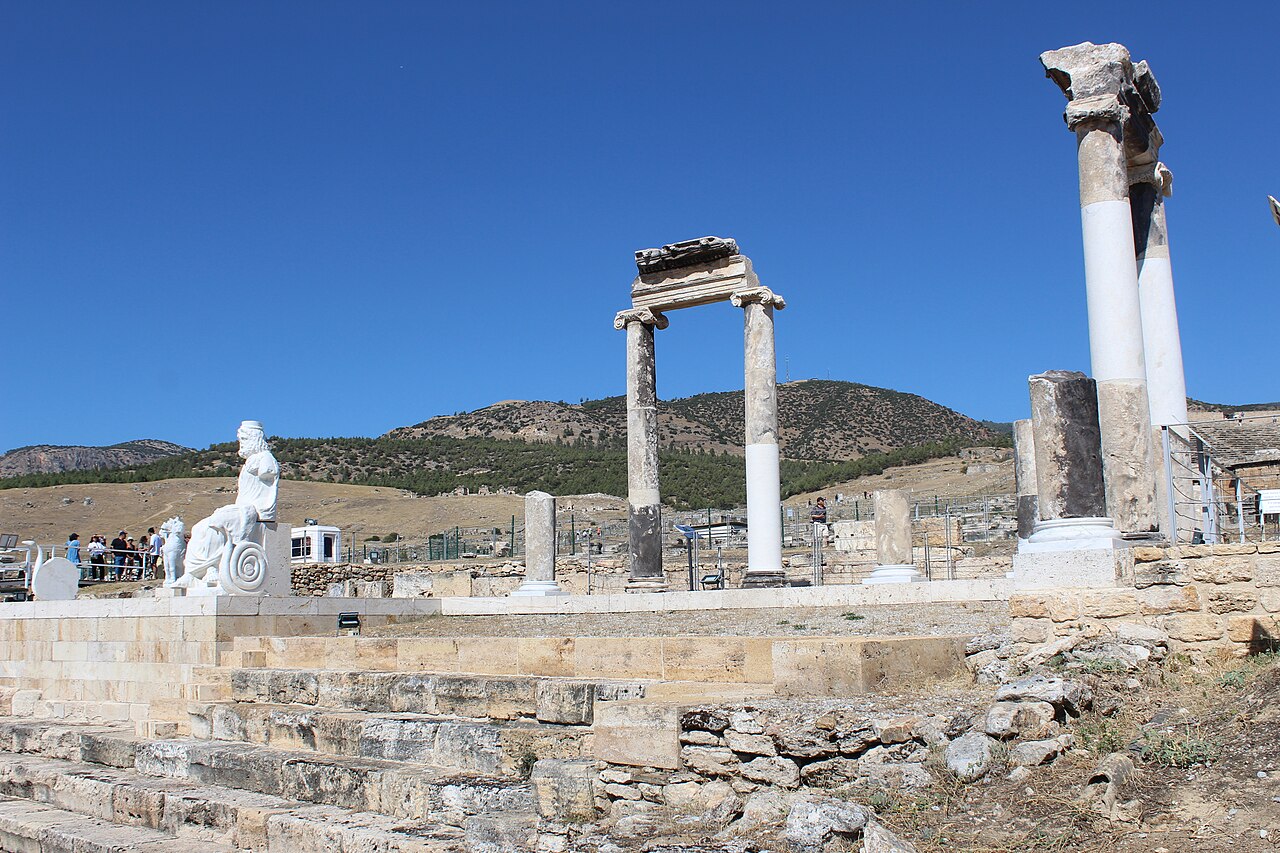
What the excavations established
The Italian Archaeological Mission has investigated Hierapolis for decades. Its published research explains that a broad survey and excavation identified the Ploutonion south of the Sanctuary of Apollo. That matters because the famous place had been discussed and sought for a long time. The identification rests on the relationship between literary descriptions, topography and excavated structures, rather than on one dramatic object. The mission has also studied the sanctuary’s changing phases, so the visible arrangement should not be treated as a single moment frozen in antiquity.
The Italian Ministry of Foreign Affairs reported restoration at the Ploutonion in 2018, carried out by the mission in cooperation with Turkish institutions. A photograph from 2015 or 2025 therefore records a particular stage in the site’s presentation. It should not be used to promise that every wall, pathway or display will look exactly the same during your visit. On-site interpretation and barriers take priority over any older picture in a travel article.
Reading an ancient account carefully
Ancient authors wrote about dangerous vapours at the sanctuary, but their accounts were not modern safety surveys. The feature that made the place memorable to them was also linked to the city’s geology. Archaeological research describes a fault line with hot water and gas emissions in the central area of Hierapolis. A visitor can understand why such a place became a focus of ritual without trying to recreate an ancient experiment or approach a restricted opening.
The stories also remind us that a sanctuary was an active social place. People came to watch, interpret and remember ceremonies. The present ruins cannot reproduce the full sound, movement or beliefs of those gatherings. What survives is a set of physical clues: the cave area, built edges, surrounding sanctuary and a setting closely tied to the terrain. Look for those clues before accepting a simplified “portal” label as the whole explanation.
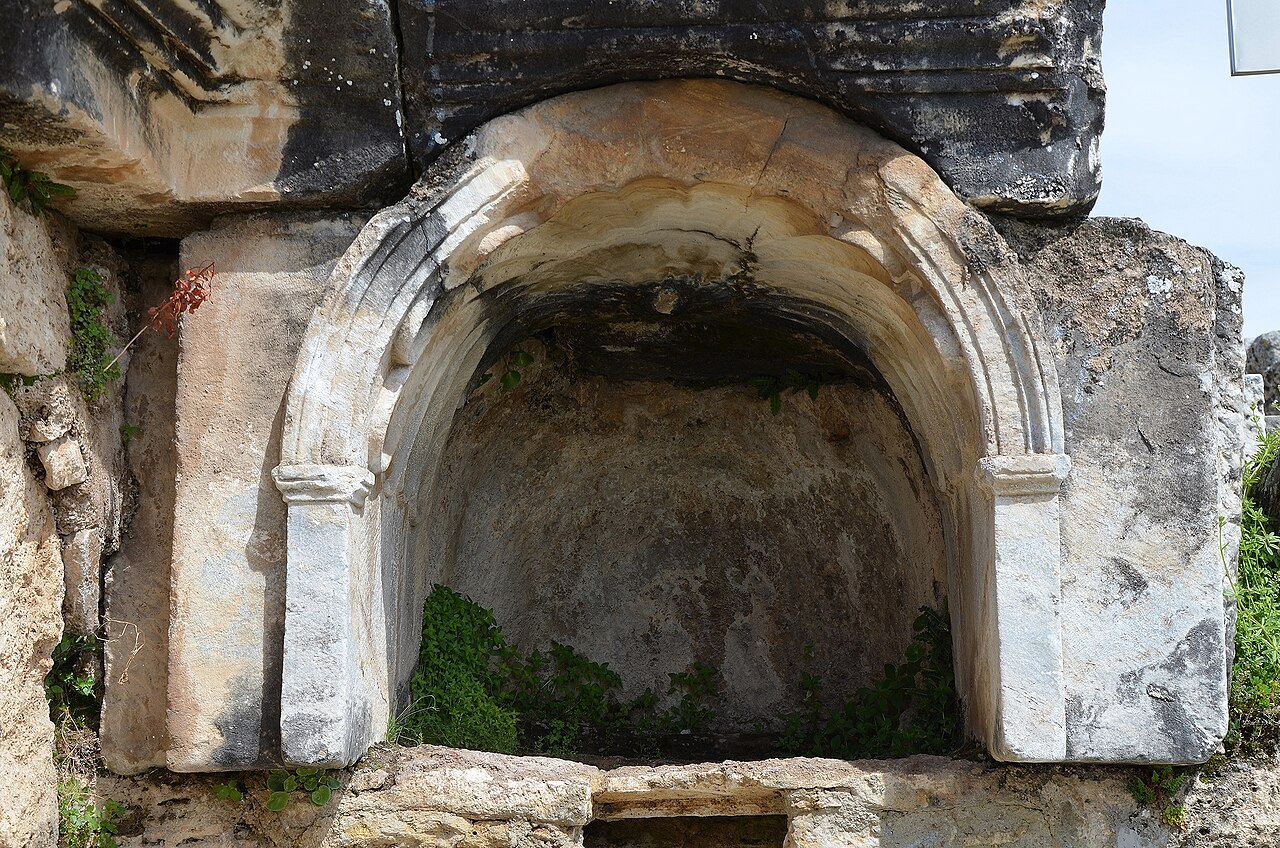
How to look at the sanctuary on a visit
Begin with the widest permitted view. Notice the line of the structures and where the ground changes level. Then compare the close stonework with the larger setting. The broad photograph above helps orient the remains; the second image shows why a detail can be easy to misread when isolated from its surroundings. Do not cross barriers, descend toward a fissure or assume an old photograph marks a current visitor route. The geology that shaped the ancient story is a reason to respect modern site controls.
Hierapolis is an extensive archaeological landscape, so plan for walking on uneven ground and exposure to sun or weather. Bring water and suitable shoes. Check current access, admission and any conservation closures with the official Hierapolis-Pamukkale listing before you go. This guide deliberately gives no fixed ticket price or opening time, because those details change. It also makes no promise that a tour automatically includes this particular stop.
Connect the Ploutonion with the rest of Hierapolis
The sanctuary is easier to understand when set beside the city’s other uses of water and stone. The travertine guide follows the spring water down the white hillside. Our Frontinus Gate and colonnaded street article explores a civic route through the ruins. These places had different functions and histories, yet each was shaped by the landscape around Hierapolis. Moving between them helps reveal a city more varied than the familiar terrace photograph.
If the Ploutonion matters to your visit, discuss it when planning a private Pamukkale and Hierapolis tour. Ask for a route that allows time to see the sanctuary from the open visitor area, subject to access on the day. The published tour page is a starting point for that conversation; confirm the final itinerary, admission arrangements and any special requirements in writing. A thoughtful stop here is about reading a complex place, not chasing a sensational headline.
Sources and further reading
Explore Pamukkale with context.
Review the route and inclusions before requesting your own private itinerary.
EXPLORE THE PAMUKKALE TOUR