
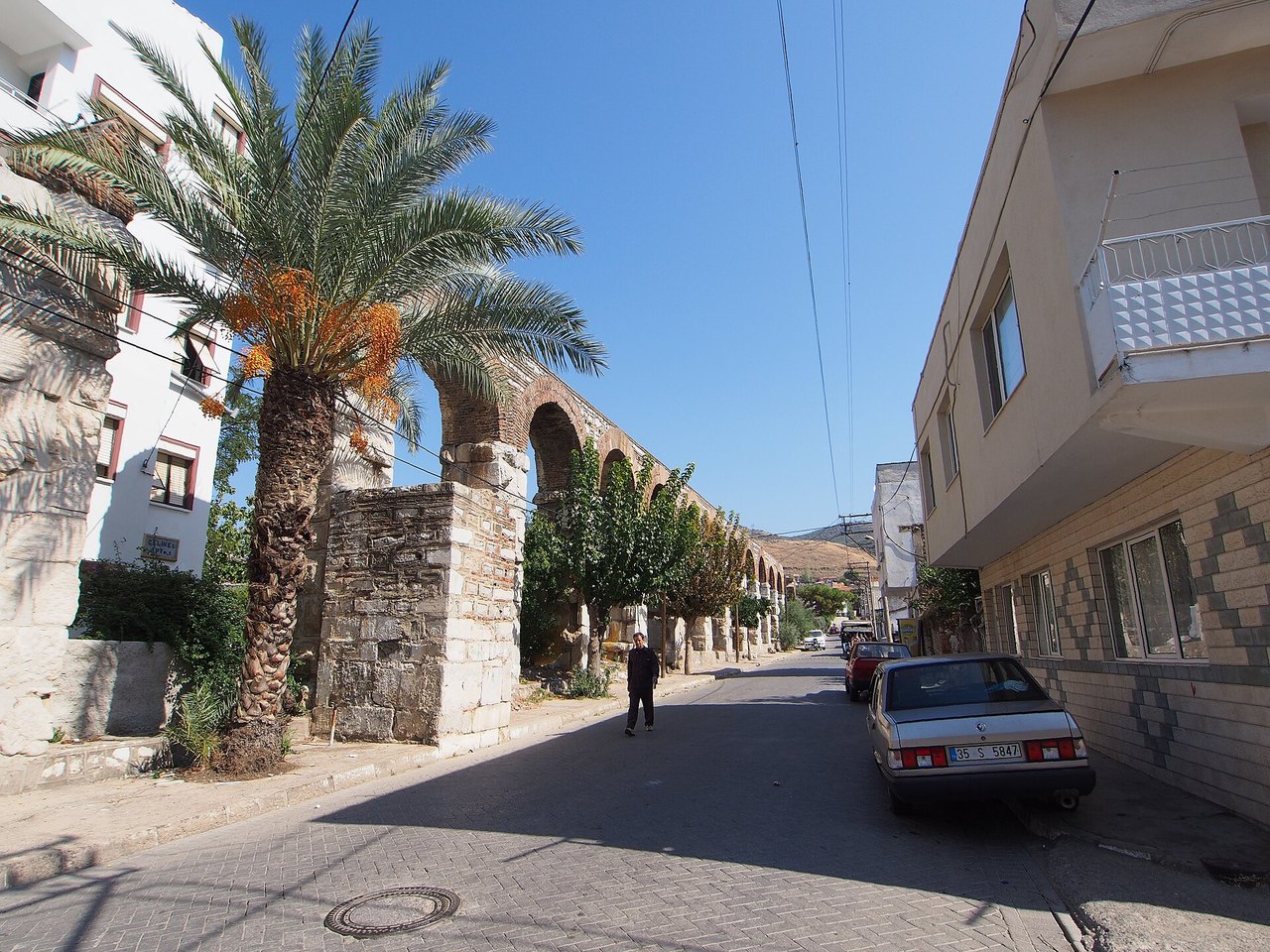
A line of old arches crosses an ordinary street in Selçuk, close to the railway station. It is easy to mistake the aqueduct for a backdrop and keep walking. Yet these stone remains connect the modern town with a much older settlement on Ayasuluk Hill. UNESCO's Ephesus nomination records a Byzantine water conduit that brought drinking water from springs between Belevi and Selçuk to the hill and the Basilica of St. John. Looking at the surviving arches is a chance to follow infrastructure through a lived-in town, rather than only through a monumental archaeological site.
Water had to reach the hill
The UNESCO nomination describes the Byzantine aqueducts as beginning east of the Gate of Persecution at the Basilica of St. John. The route passed through the Şirince gorge, continued across the town and carried water northward from springs in the area between Belevi and Selçuk. Its destination was the Byzantine settlement on Ayasuluk Hill and the church, then an important medieval pilgrimage centre. This gives the structure a clear purpose: water moved from a source beyond the town into a community that had shifted its focus uphill.
The route also shows why an aqueduct should be read as a system, not just a photogenic bridge. A conduit needs a source, a carefully managed gradient, channels or pipes, supports where terrain demands them, and a point of delivery. The high arches are only the visible part. The water's journey began outside the town, crossed different ground and ended where people needed it. Even when the channel itself is no longer continuous, the remains help explain the practical geography of medieval Ayasuluk.
What the masonry can tell you
Look at the contrast between the stone supports and the brick arches. The nomination dossier notes that marble blocks recovered from Ephesus and the Artemision were reused in the aqueduct's pillars, with brick used above. Reused material is not an oddity to hide; it is evidence of how builders made use of resources already at hand. A block that once formed part of a different monument could acquire a new role in a later water system.
Near the railway station, the same dossier says the surviving structure reached considerable height. The arches had to carry a channel across a changing urban landscape while maintaining a workable fall for water. You do not need to estimate the gradient from the pavement to appreciate the engineering problem. Notice how the bridge meets the ground, how one arch follows another and how the route continues beyond the most complete section. The aqueduct makes infrastructure visible at human scale.
It is also important to avoid treating every arch around Selçuk as one unchanged structure. The region had more than one historic waterwork, and the Ministry of Culture and Tourism's nomination distinguishes the Byzantine conduit from other monuments on Ayasuluk Hill. A separate publication from Ankara's water authority labels a historic structure near Selçuk as the Pollio Aqueduct. If a sign, guide or publication gives a particular name or date, consider which section it describes rather than applying that label to every surviving arch.
Follow the route through today's town
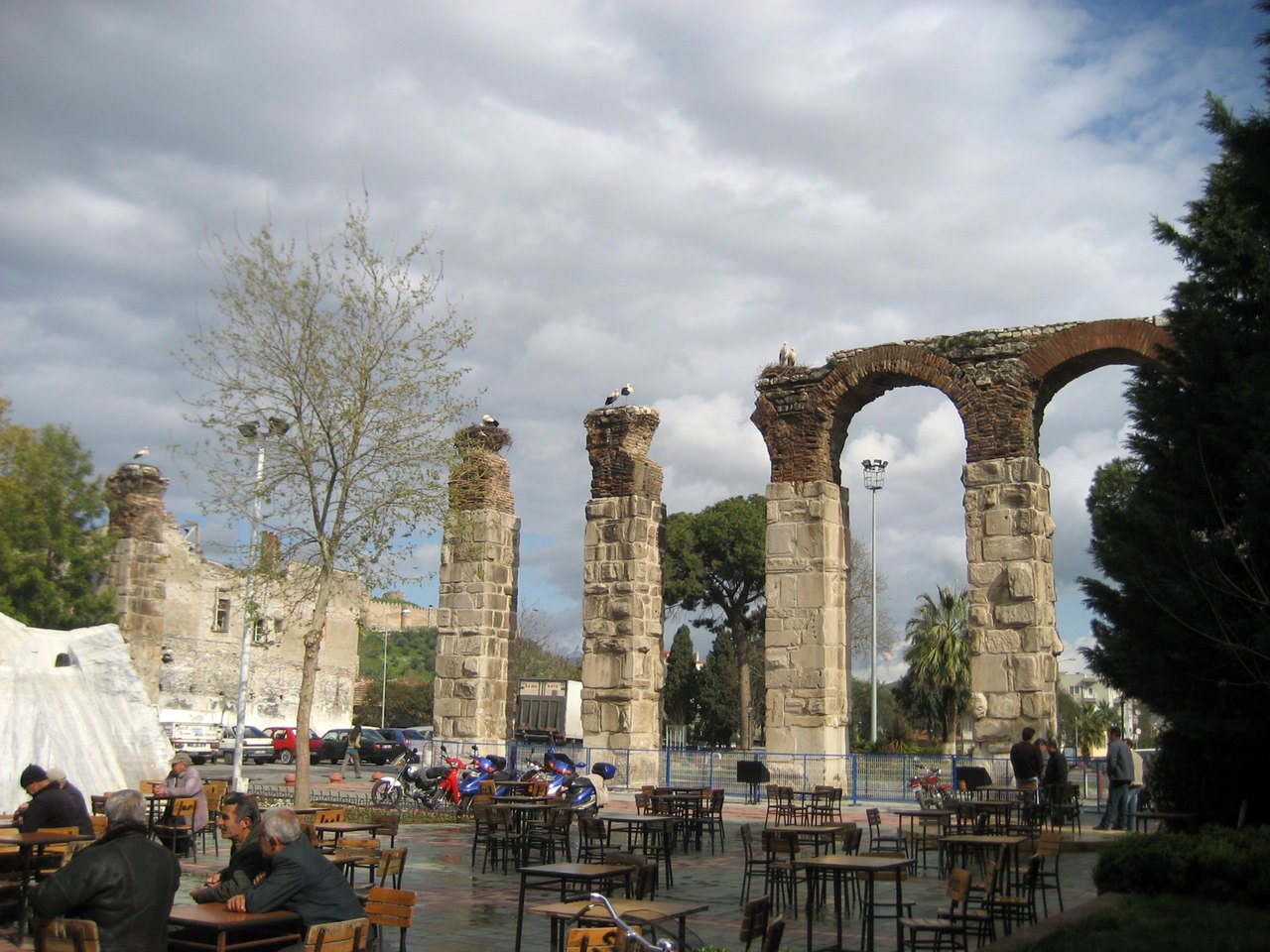
Unlike the columns and paved streets inside the ancient city, Selçuk's aqueduct is encountered amid daily life. The train station, roads, homes and cafés are part of its present setting. That contrast is useful: heritage here is not separated from the town by a single gate. A short look at the arches can prompt questions about how a medieval water route passed through a place that continues to grow and change.
Begin from a public sidewalk and observe the structure without entering private property or stepping into traffic. Look for the line of arches, then imagine the channel above them and the broader route beyond what remains visible. The UNESCO dossier traces the system toward Şirince and the springs inland, while also explaining its connection with Ayasuluk Hill. The view from one street corner cannot show that full route, so use the written evidence to connect the fragments rather than assuming the arches stand alone.
For additional context, the Ayasuluk Castle guide and our article on the İsa Bey Mosque introduce other periods represented on the hill. The Basilica of St. John is the aqueduct's documented destination in UNESCO's account. These places are related by geography, but each has its own history and should be explored on its own terms.
Planning a respectful visit
The aqueduct is encountered in the town rather than as a separately ticketed attraction with a single visitor entrance. Do not assume that every section is accessible or that an old photograph shows today's route. Follow public paths, respect traffic and residents, and avoid climbing on, touching or removing material from the masonry. If you are travelling with children, keep them close around streets and uneven ground. The aqueduct is best appreciated through a brief, attentive stop, not by trying to explore restricted edges.
Selçuk is served by rail as well as road connections, but schedules can change; verify current transport details with the operator before travelling. If you are visiting Ephesus on a cruise day or a guided itinerary, check whether there is time to stop in town. A private Ephesus tour does not automatically include an aqueduct visit. Ask the operator to confirm the route, available time and transport in writing before booking. We do not list a fixed visit duration, ticket price or opening hour because this is a town monument and arrangements can vary.
The aqueduct's arches are modest beside Ephesus's grand façades, but they tell a valuable story about the region's everyday needs. They connect a spring-fed route to a Byzantine community on Ayasuluk Hill, reuse material from older monuments and remain woven into Selçuk's streets. Pause long enough to trace the direction of the water, then let the rest of the town fill in the map.
Sources and further reading
Explore Selçuk / Ephesus with context.
Review the route and inclusions before requesting your own private itinerary.
EXPLORE PRIVATE EPHESUS TOURS