
The Basilica of St. John dominates many photographs of Ayasuluk Hill, yet a smaller structure beside it tells a more intimate story. In the baptistery, a sunken basin occupies the centre of an eight-sided space. The surviving walls and floor allow visitors to think about how people entered a Christian community, rather than only how a monumental church looked from a distance. This is a focused stop for anyone exploring the later history of Ephesus around today's Selçuk.
Find the baptistery within the larger complex
Ayasuluk Hill belongs to the UNESCO World Heritage property of Ephesus. The ancient settlement changed location over time as the coastline moved and the needs of its inhabitants evolved. The basilica and its neighbouring buildings belong to a later chapter than the famous Library of Celsus and the Roman streets below. UNESCO identifies the Basilica of St. John as evidence of the area's importance to Christian pilgrimage. It is useful to approach the baptistery with that wider landscape in mind, while giving its own plan and purpose careful attention.
The Ephesus World Heritage nomination dossier describes the baptistery as an octagonal centre with rooms to its sides and a baptismal basin, or piscina, set into the floor. It links the building to an earlier phase of the church and says it remained in use alongside the later domed basilica. The Turkish museum authority's site description gives a different date for the baptistery. Rather than treating a single label as a complete building history, recognise that the complex developed through several phases and that published summaries may differ in their dating.
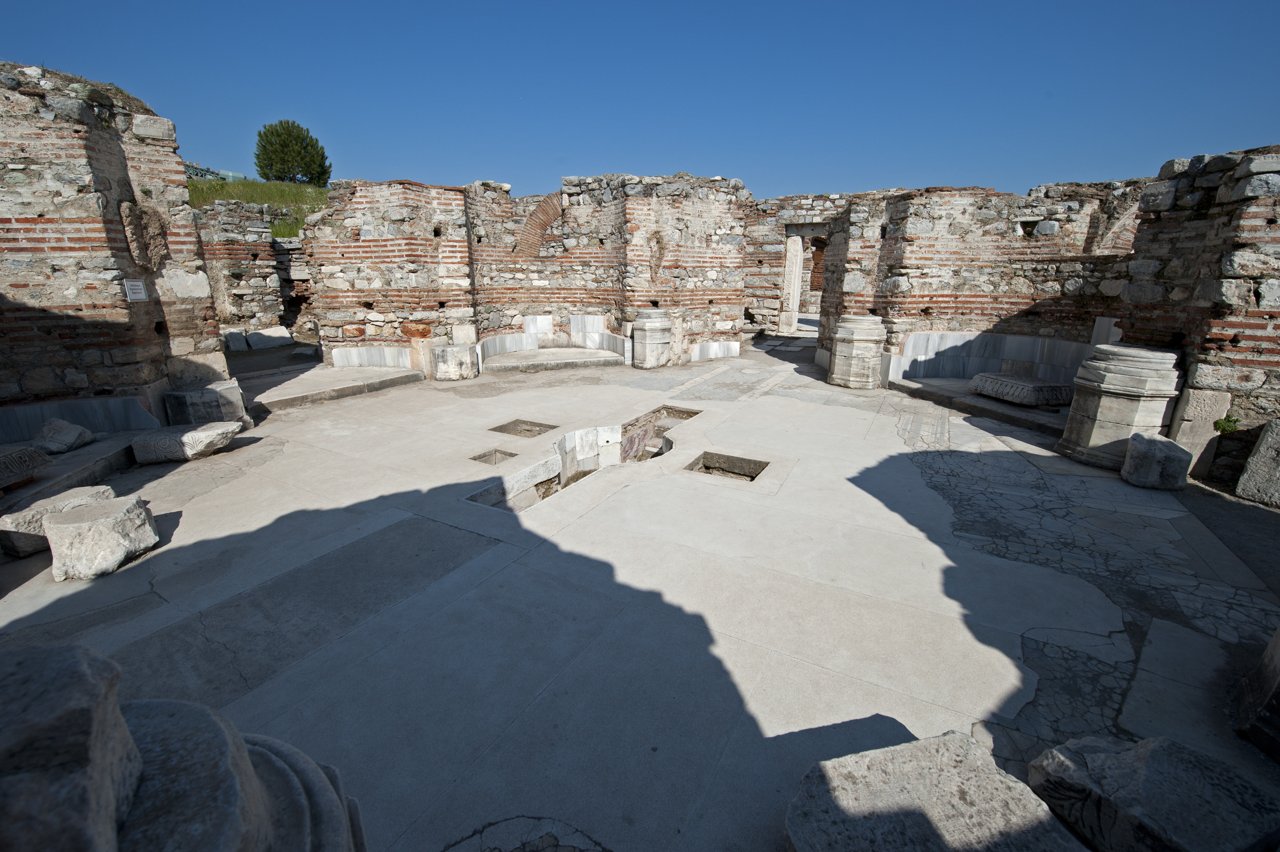
Look down before looking up
Inside the baptistery, the most striking feature is at floor level. The basin's recessed form makes it distinct from the broad stone floor around it. Its shape and position help explain the building's purpose without requiring a reconstructed roof or walls. The nomination dossier associates this type of font with adult baptism in the fifth and sixth centuries. That account describes a practice and an architectural setting; it does not mean that every person who passed through this room followed precisely the same ceremony.
Pause at a permitted viewing point and trace the room's geometry with your eyes. Where is the basin in relation to the surrounding floor? How do the surviving doorways suggest movement between the central space and neighbouring rooms? Which masonry belongs to the baptistery, and which elements seem to connect it to the wider church complex? Those questions make the visit richer than a quick photograph. They also keep interpretation tied to visible evidence instead of inventing details that the ruins cannot confirm.
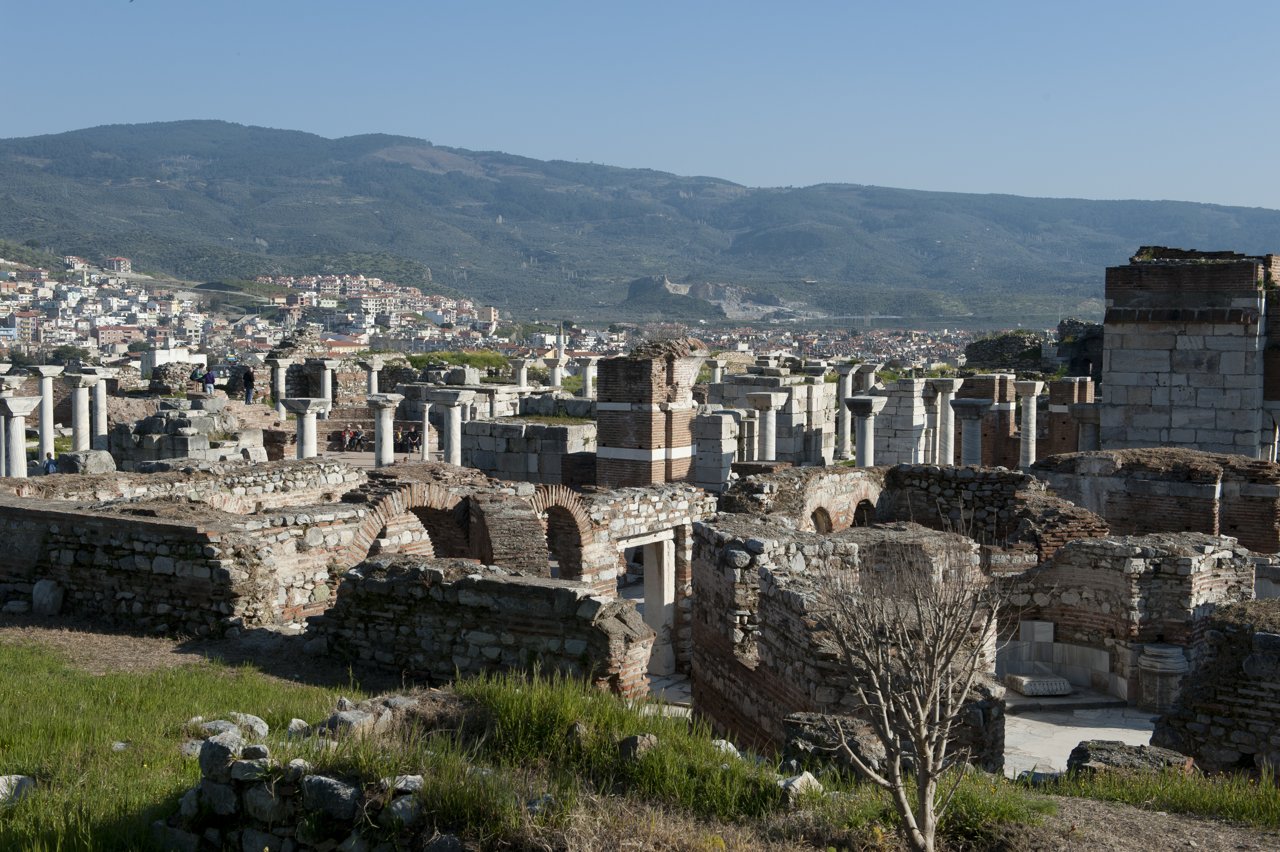
The two photographs here show different scales of the same place: one places the baptistery within Ayasuluk's built landscape, while the other looks into the central room. Both images were taken in 2011. Conservation work, barriers and visitor routes can change, so regard them as historical views of the surviving site, not a promise that every angle is accessible today. Any modern path or protective measure should be understood as part of the site's care, not as a feature of the ancient ritual.
Read the changing city around it
St. John's Basilica is associated with a tradition concerning John the Apostle. The baptistery is a part of that church complex; its presence should not be confused with a claim that John the Baptist built or used this room. The larger basilica was rebuilt on a monumental scale under Justinian, according to the UNESCO nomination. Earlier elements remaining beside later construction make Ayasuluk a useful place to consider continuity as well as change. A site can retain a religious function while its buildings are enlarged, adapted or repaired.
The hill also connects to the practical history of Selçuk. Our article on Selçuk's Byzantine aqueduct follows a water route whose destination included the settlement and church on Ayasuluk. That is infrastructure serving a community, not just a picturesque row of arches. Nearby, Ayasuluk Castle and the İsa Bey Mosque represent other periods of the hill's history. These places are close enough to compare, but they should not be collapsed into a single era or religious story.
For a broader account of the church and its setting, see our Basilica of St. John guide. The baptistery is a narrower subject: its sunken basin, arrangement of rooms and place beside the larger church reward a few extra minutes. Taking time at one small building can make a sprawling archaeological landscape easier to understand.
Plan a respectful visit
Before setting out, check the official museum page for current access arrangements. This article avoids fixed opening hours, admission prices and assumptions about which areas are open. Ayasuluk Hill is exposed in places, so bring comfortable shoes, water and sun protection. Keep to marked routes and avoid stepping on loose masonry or entering a cordoned space for a better photograph.
If you are combining Selçuk with the ancient city, allow enough time to appreciate that they represent connected but distinct chapters of Ephesus. A private biblical Ephesus itinerary can be discussed around the places most relevant to your interests; confirm the actual route, entrances and inclusions before booking. At the baptistery, one final look from the basin toward the surrounding rooms is often more useful than another wide photograph. It returns the focus to the people and practices that gave this modest space its meaning.
Sources and further reading
Explore Ephesus / Selçuk with context.
Review the route and inclusions before requesting your own private itinerary.
EXPLORE A BIBLICAL EPHESUS TOUR