
Pamukkale's white terraces usually set the first expectation for a visit to Hierapolis. Yet the ancient city above them contains another, quieter story: people kept using, enclosing and adapting the settlement long after its great Roman monuments were built. The southwestern Byzantine gate is a useful place to begin looking for that later city. Its surviving arch and adjoining masonry frame a passage rather than a grand museum display. Walk toward it slowly and it becomes possible to imagine a changing urban boundary, a route through it and the practical choices made by people who continued to live here.
A gate in a city with several histories
Hierapolis was not created in a single moment. UNESCO traces its origins to a Hellenistic thermal settlement established by the Attalid kings of Pergamon, then describes the city's Roman flourishing and its later importance as an Eastern Roman religious centre. The Turkish Ministry of Culture and Tourism likewise presents a city repeatedly affected by earthquakes and rebuilt over time. A visitor who sees only a Roman theatre and the travertines misses those later layers. A gate and wall are particularly good reminders that the shape and needs of a city could change while its older structures remained visible.
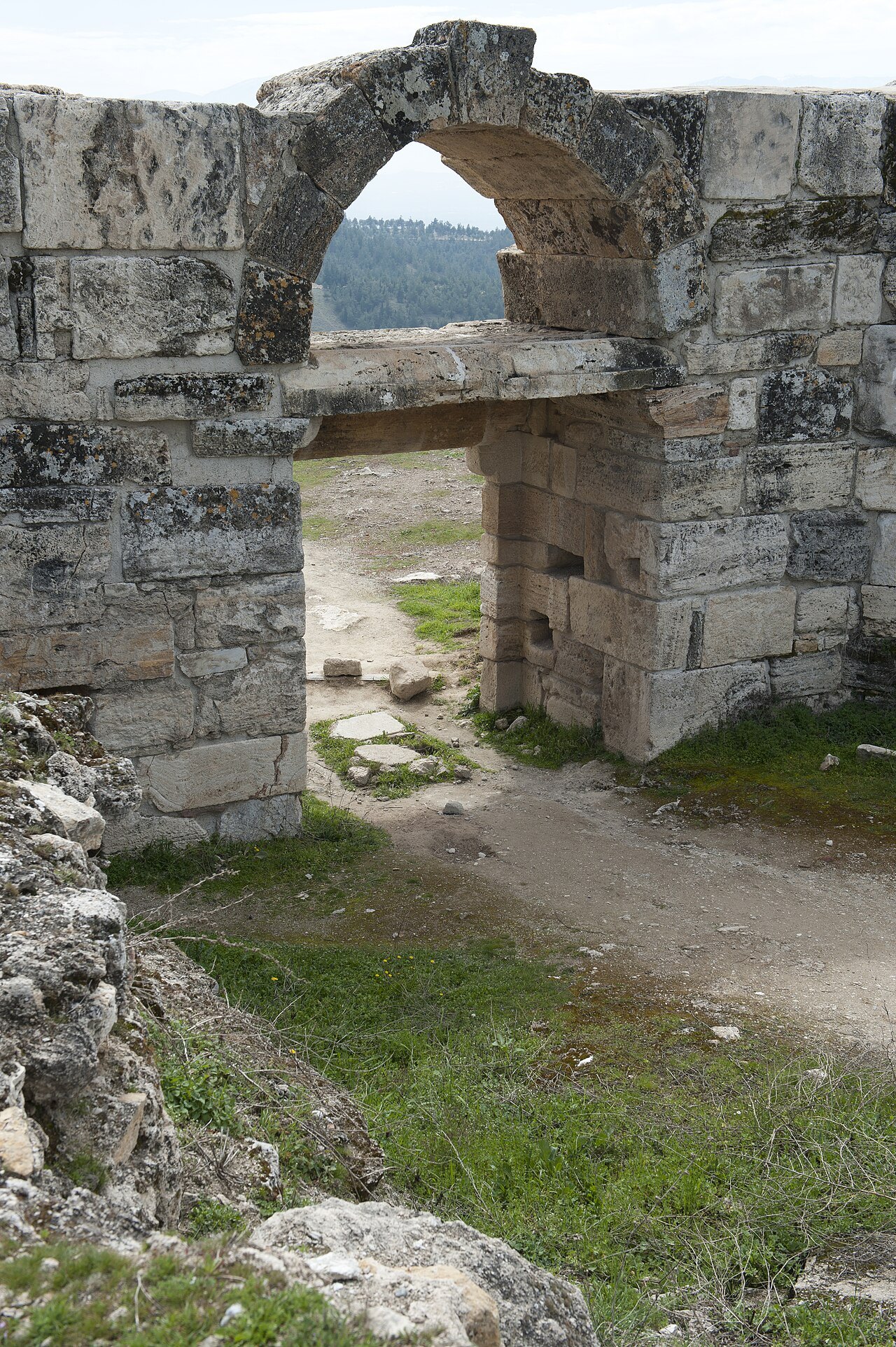
The word “Byzantine” here refers to the eastern Roman phase of Hierapolis. It is a historical label for the later city, not a claim that every stone beside the opening belongs to one precisely dated building campaign. Archaeological sites often incorporate repairs, reused material and later conservation. Read the masonry for differences in texture and arrangement, but let on-site interpretation establish the dates. The photograph below shows an approach to the gate as it appeared in 2011; surfaces and visitor routing may have changed since then.
What to notice at the passage
Begin with the opening itself. A gate regulates movement: it marks where a route crosses a boundary, concentrates traffic and gives the traveller a moment of transition. Notice the relationship between the arch, the wall that continues beside it and the ground on either side. Looking back after you pass through can reveal a different silhouette. The effect is modest compared with the theatrical approach to a large Roman monument, but it is more instructive if you ask what the passage connected and why a wall was useful in this location.
Do not assume that every feature visible beside the gate belongs to the same period. Modern visitor paths can change as the site is conserved. The Commons photographer identifies this as the southwestern Byzantine gate and notes another nearby opening in the same wall. This is a reason to be precise about what a photograph can establish. The image documents one visible passage; it does not, by itself, settle the construction date or the identity of every adjacent opening.
Look also at the scale of the wall in the wider landscape. Hierapolis sits above the Pamukkale terraces rather than in a flat, isolated archaeological field. UNESCO treats the natural formations and built city as one World Heritage property. The wall belongs to the human story within that setting. It may seem less spectacular than the white calcite slope, but tracing it gives the city an edge and a sense of inhabited space. A gate makes that edge tangible.
Connect the gate to the later city
UNESCO identifies the Christian monuments of Hierapolis, built between the fourth and sixth centuries, as an important early Christian architectural group. The Martyrium of St Philip is one major point in that story, though a gate should not be treated as an illustration of a church. Together they show how much more there is to Hierapolis than its Roman public buildings. Religious architecture, walls and routes all help explain the long life of the settlement.
For contrast, compare the southern gate with the Frontinus Gate and colonnaded street. They belong to different ways of presenting and moving through the city. The monumental Roman approach emphasizes a broad street and civic architecture. A later wall passage invites questions about enclosure and changing urban priorities. Avoid compressing the two into one “main gate” in your memory or photographs. Their separate contexts are what make a walk between them rewarding.
It also helps to resist a simple rise-and-fall narrative. A later wall does not mean all earlier life abruptly stopped. Buildings were used, repaired, abandoned or repurposed at different times. Earthquakes affected the site, and modern restoration affects what we can see. The surviving gate is a fragment of this complicated sequence. Its value lies in prompting a better question: how did people navigate a city whose inherited architecture and living needs changed over centuries?
Plan a thoughtful visit
Check the official Hierapolis-Pamukkale archaeological site listing shortly before travel for current access and entrance arrangements. Routes, conservation barriers and available viewpoints may change. This article does not quote an admission price or promise access to a particular section. Follow marked paths, keep off loose masonry and allow time to read the signs near the structure. The site is extensive and exposed; suitable shoes, water and sun protection make a slower walk more comfortable.
If your itinerary is limited, decide whether you want a broad overview or a close reading of a few linked places. The gate pairs well with the Frontinus approach and the northern necropolis as a study in movement, edges and memory. The travertines add the natural context. These are suggestions for understanding the landscape, not a guarantee that every stop fits one visit. Confirm your route, pickup point and any optional stops in writing if you are considering a private Pamukkale and Hierapolis tour.
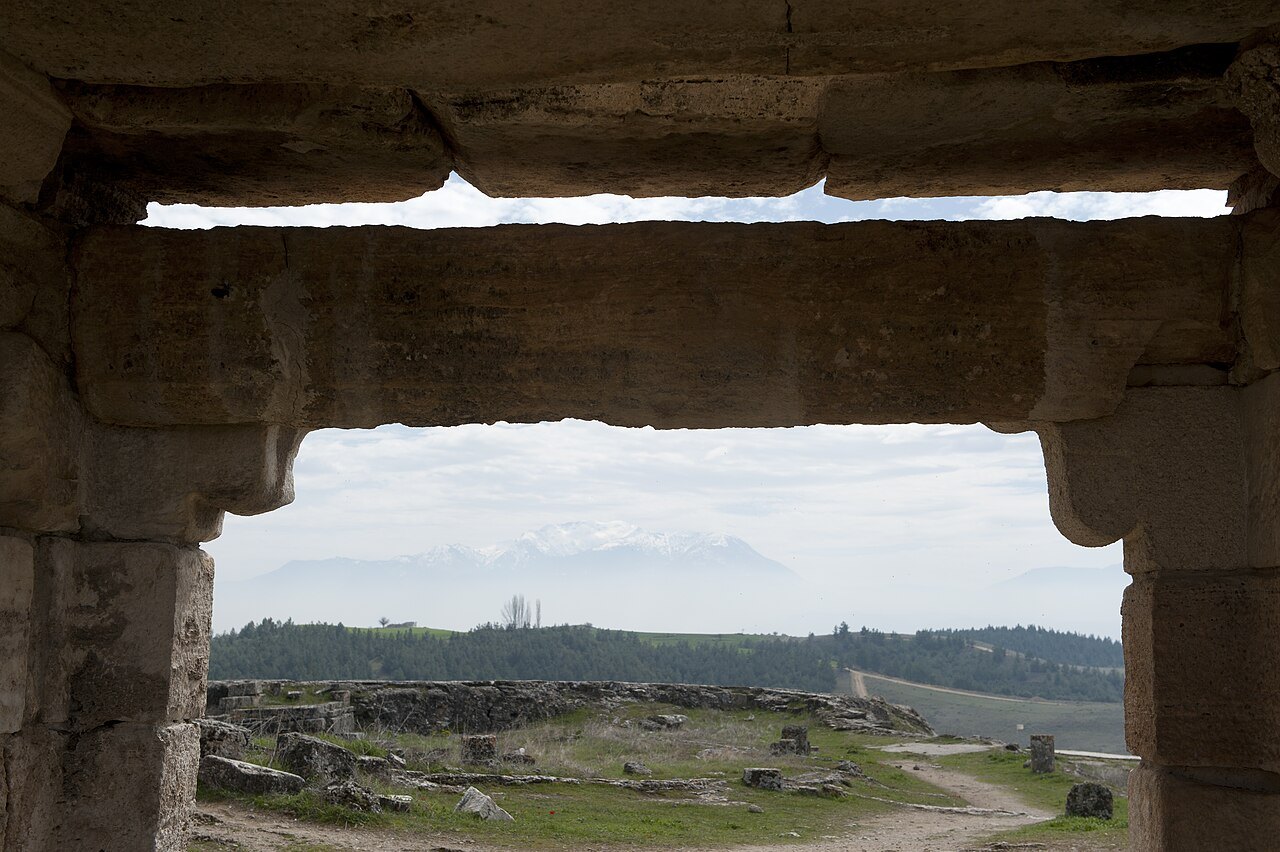
Before leaving the gate, turn around and look through the arch once more. The view may be small, but it captures the essential idea of Hierapolis: one place seen through different periods. The thermal landscape drew attention to the site; the walls and passages show how its residents kept reshaping the city around that enduring setting.
Sources and further reading
Explore Pamukkale / Hierapolis with context.
Review the route and inclusions before requesting your own private itinerary.
EXPLORE THE PAMUKKALE TOUR